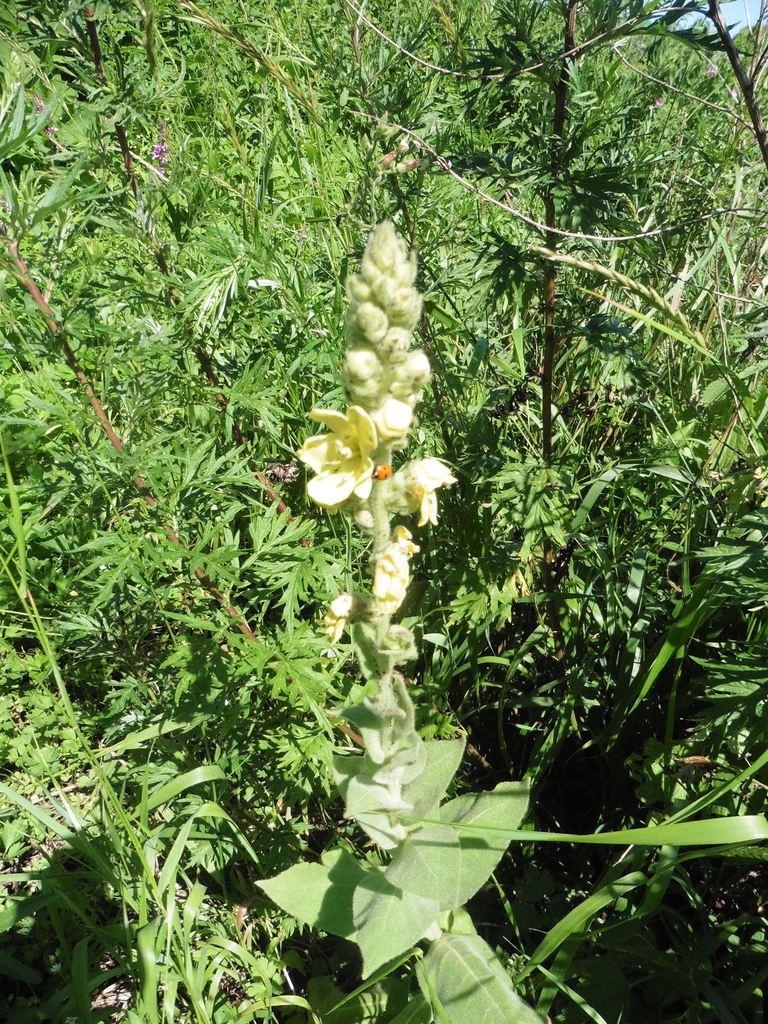
Orange mullein
- Origin
- Europe
- Part used
- See detailed notebook
- Tradition
- Traditional ethnobotany
In the dry gardens and stony banks of Europe, orange mullein raises its tall, velvety silhouette as summer arrives. Herbalists of old gathered its yellow flowers one by one, early in the morning, to make one of the gentlest and oldest remedies for the airways. Its use spans the centuries under the familiar name "mullein," so closely does it resemble common mullein that folk tradition has long treated the two as nearly interchangeable.
Traditional uses
Soothing for the throat and bronchi
Mullein flower was traditionally infused to soothe irritated throats and accompany dry coughs, owing to its richness in mucilage. It featured in the chest teas of rural Europe long before the use of industrial syrups.
A calming evening tea
Taken as a tea in the evening, the flower was reputed to promote peaceful sleep in people prone to bothersome nighttime coughing.
Traditional care for skin irritation
As a poultice or infused oil, the flowers and sometimes the leaves were applied to irritated skin, chapped areas, and minor local inflammation.
Relief for minor earache
Warm mullein flower oil, poured sparingly into the outer ear canal, was a folk remedy for easing ear discomfort, a practice widespread in the countryside of central Europe.
Before you use it
Always strain the infusion carefully through a fine cloth or a coffee filter, as the fine hairs of the flowers and leaves can irritate the throat if ingested. Never use in case of a perforated eardrum or ear discharge without prior medical advice. It is not advisable to replace medical advice in case of a persistent cough, fever, or worsening respiratory symptoms. As a precaution, avoid prolonged or high-dose use in pregnant or breastfeeding women, and in young children, without consulting a health professional.
The detailed notebook
- Prepared as a paste or decoction
- Traditional duration of use
- Known contraindications
- Related species and their uses
Where to find it
Partner herbalists — available with the detailed notebook.
Sources
PFAF