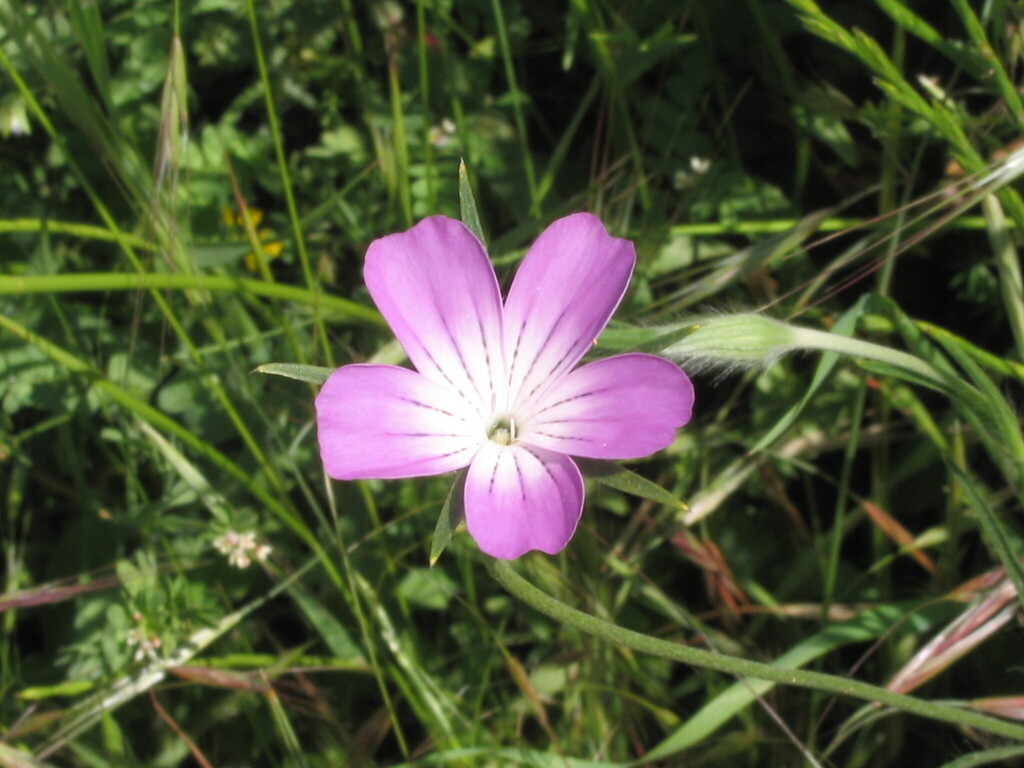
Corncockle
- Origin
- Europe
- Part used
- See detailed notebook
- Tradition
- Traditional ethnobotany
Once an unwelcome companion of grain fields, corncockle is recognizable by its solitary purple flowers rising above the ears of wheat. Old herbalists knew it less as a remedy than as a plant to watch out for, since its presence in grain could pose problems. Its history is thus more that of a feared plant than one used for healing.
Traditional uses
Poultice for the skin
In certain parts of rural Europe, crushed seeds may have been used externally on skin conditions, although this practice is poorly documented and largely abandoned.
Historically reported use as a dewormer
Old materia medica texts mention a folk use of the seeds as a dewormer, but always noting a high toxicity that made the practice risky.
A weed of the wheat fields
Corncockle was mostly known to farmers as a weed of grain crops, whose presence in wheat grain was feared for health reasons rather than sought for any benefit.
Before you use it
The whole plant, and especially the seeds, contains githagin and agrostemmin, toxic saponins that can cause serious digestive and nervous system disorders. Internal use is strongly discouraged without the supervision of a healthcare professional qualified in plant toxicology. Contraindicated for pregnant or breastfeeding women and for children, due to its proven toxicity. Never confuse corncockle seeds with grain seeds when harvesting or handling old seed mixtures.
The detailed notebook
- Prepared as a paste or decoction
- Traditional duration of use
- Known contraindications
- Related species and their uses
Where to find it
Partner herbalists — available with the detailed notebook.
Sources
PFAF