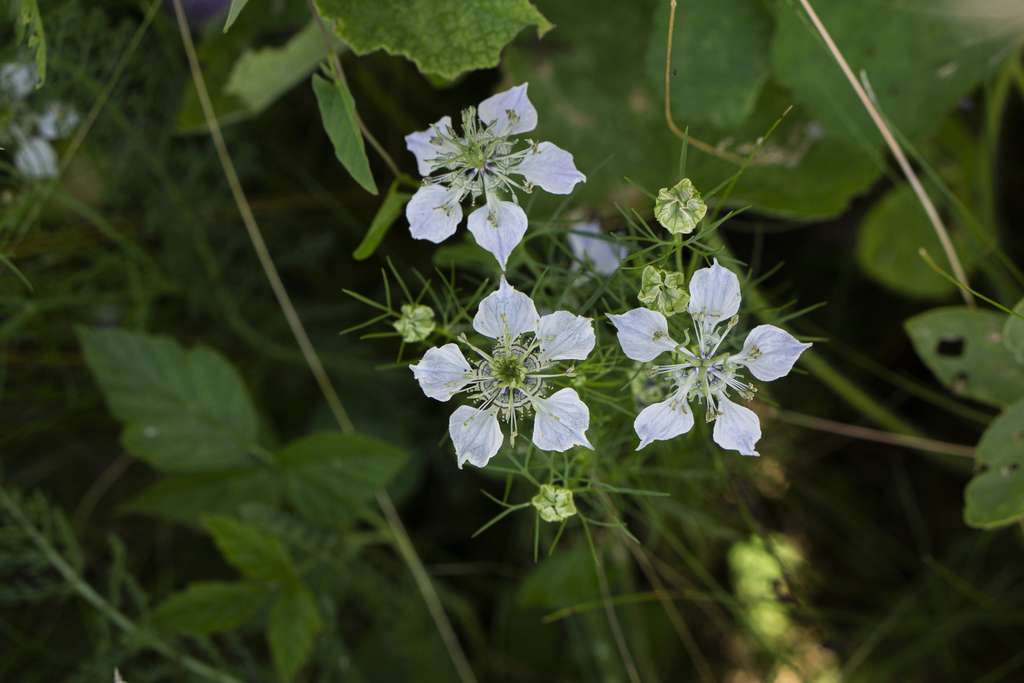
Nigella
- Origin
- Middle East
- Part used
- Seeds/fruits
- Tradition
- Traditional ethnobotany
Known since ancient Egypt — nigella seeds are reported to have been found in the tomb of Tutankhamun — this small, sharp black seed has accompanied Middle Eastern traditions for millennia. The Prophet Muhammad is said to have called it a remedy "for everything except death," a saying that greatly contributed to its reputation in Arab and Persian folk pharmacopoeia. Even today it is as much a culinary spice as a seed of traditional herbalism.
Traditional uses
Supporting digestion
Nigella seeds were traditionally chewed or infused to accompany heavy meals and soothe bloating, in the manner of many aromatic seeds of the Mediterranean basin and the Middle East.
Winter respiratory comfort
Nigella oil and seeds hold a long-standing place in Middle Eastern folk uses to accompany periods of seasonal chill and support respiratory comfort.
Traditional skin application
Nigella oil, obtained by pressing the seeds, was applied externally to the skin in certain Arab and Persian traditions to soothe skin irritations.
A tonic, fortifying seed
Regarded as a universal remedy in old Arab traditions, nigella was regularly eaten in small amounts as a general support for vitality.
Before you use it
Not advised during pregnancy and breastfeeding owing to a traditional emmenagogue use that has been reported and a lack of sufficient safety data. To be avoided in young children without the advice of a health professional. May interact with certain treatments (anticoagulants, antidiabetics, antihypertensives): seek the advice of a health professional if undergoing treatment. Do not exceed ordinary culinary amounts without supervision, as the pure oil and concentrated seeds may present toxicity at high doses or with prolonged use.
The detailed notebook
- Prepared as a paste or decoction
- Traditional duration of use
- Known contraindications
- Related species and their uses
Where to find it
Partner herbalists — available with the detailed notebook.
Sources
PFAF, Wikipedia