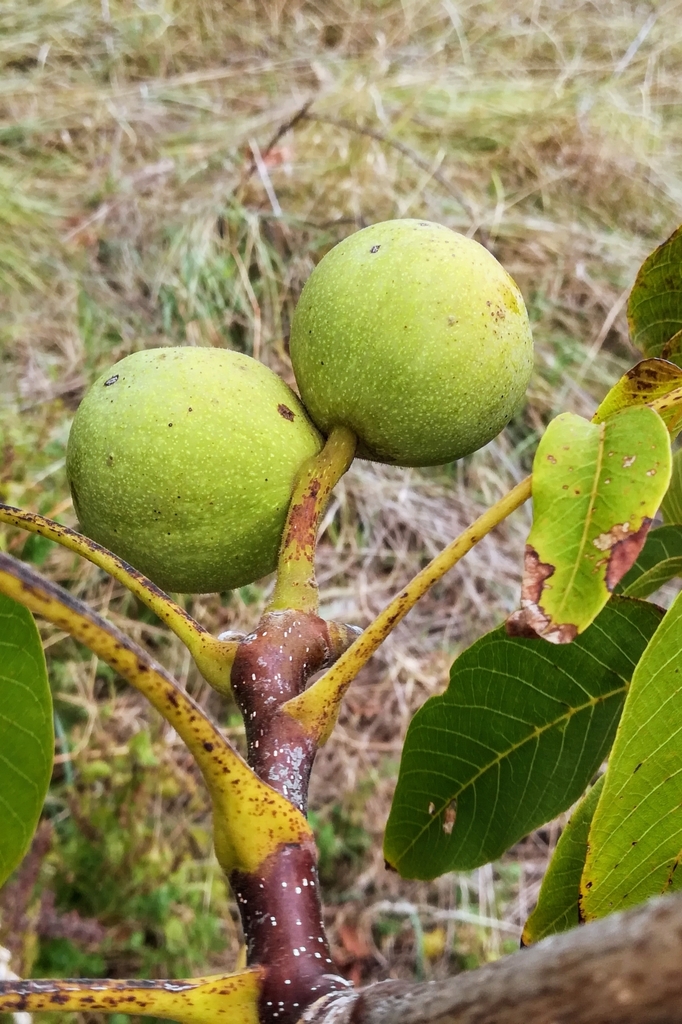
common walnut
- Origin
- Europe
- Part used
- See detailed notebook
- Tradition
- Traditional ethnobotany
Common walnut has been part of European landscapes since antiquity, valued as much for its wood and fruit as for its leaves, long gathered by country herbalists. Old notebooks cite the walnut leaf for its uses on the skin and for digestive comfort, while the husk and shell went into other household preparations.
Traditional uses
Traditional skin care
Walnut leaf was traditionally used as a lotion or bath to soothe oily skin or skin prone to minor irritation.
Light digestive support
A leaf infusion was sometimes taken after meals in folk tradition, to help with digestion felt to be heavy.
Shine and scalp care
A decoction of walnut leaves was used as a hair rinse, reputed to bring out highlights in brown hair and cleanse the scalp.
Traditional regulating use
Some old herbals mention walnut leaf in preparations meant to help with the menstrual cycle, a use that remained empirical and poorly documented.
Before you use it
Walnut husk and bark contain compounds (juglone, concentrated tannins) that can irritate the skin or mucous membranes with prolonged or concentrated use. Prolonged internal use of leaf- or husk-based preparations is not recommended without the advice of a health professional. Discouraged for pregnant or breastfeeding women and young children, for lack of sufficient safety data. If undergoing medical treatment, seek the advice of a pharmacist or doctor before any regular use.
The detailed notebook
- Prepared as a paste or decoction
- Traditional duration of use
- Known contraindications
- Related species and their uses
Where to find it
Partner herbalists — available with the detailed notebook.
Sources
PFAF, Wikipedia