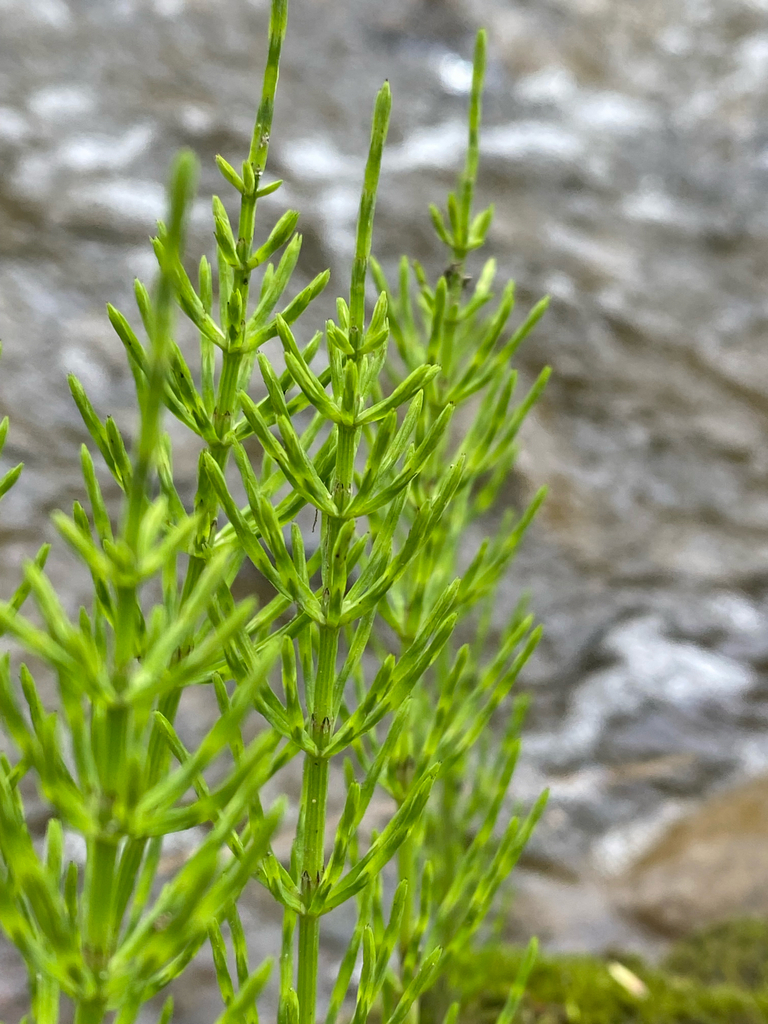
Field Horsetail
- Origin
- Europe
- Part used
- Seeds/fruits, Root, Stem
- Tradition
- Traditional ethnobotany
Standing in ditches and damp places since time immemorial, field horsetail was nicknamed "horse's tail" or "fox's tail" by old herbalists, for its slender, rough silhouette. Rich in silica, this hardy perennial has accompanied European folk traditions as an ally of connective tissue, joints, and skin.
Traditional uses
Traditional joint support
Horsetail was traditionally drunk as a tea to accompany joint and rheumatic discomfort, its richness in silica being linked by people of the past to the strength of connective tissue.
Compresses for skin and nails
Used externally, stem decoctions were applied as compresses or baths to support healing and strengthen brittle nails and hair.
A traditional diuretic tea
Historically regarded as a draining plant, horsetail featured in folk teas meant to promote urinary elimination and support kidney function.
Baths for tired tissue
Foot or hand baths made with horsetail decoction were used in the countryside to soothe tired, swollen tissue after exertion.
Before you use it
Do not use during pregnancy, breastfeeding, or in children without a healthcare professional's guidance. Avoid in cases of heart or kidney failure, as horsetail promotes water elimination and may disrupt electrolyte balance. Do not extend the cure beyond a few weeks without medical advice; prolonged use may affect the absorption of certain vitamins (notably B1). Consult a pharmacist or doctor if taking medication, particularly diuretics or heart treatments, due to possible interactions.
The detailed notebook
- Prepared as a paste or decoction
- Traditional duration of use
- Known contraindications
- Related species and their uses
Where to find it
Partner herbalists — available with the detailed notebook.
Sources
Wikipedia