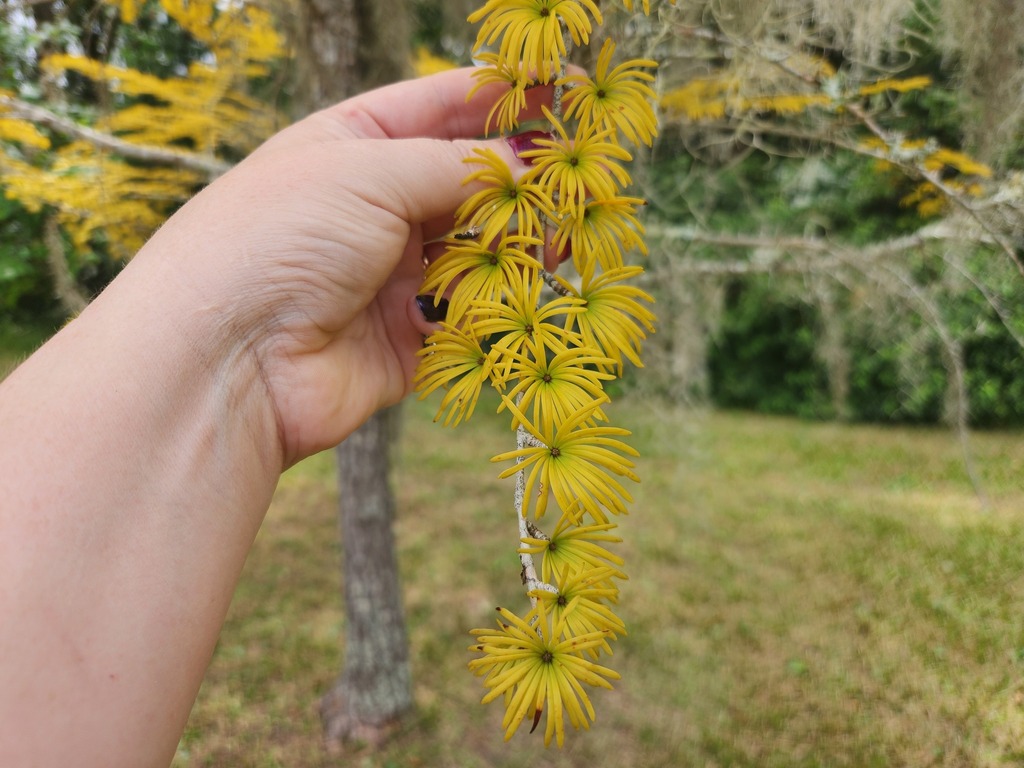
Pseudolarix
- Origin
- Asia
- Part used
- See detailed notebook
- Tradition
- Traditional ethnobotany
Pseudolarix, or "golden larch," is a majestic conifer native to the mountains of eastern China, where its root bark has been used for centuries in traditional Chinese pharmacopeia under the name Tu Jing Pi. Ancient herbalists attributed particular virtues to it for skin conditions, passed down from generation to generation in notebooks of folk remedies.
Traditional uses
Fungal skin conditions
The root bark was traditionally applied as an external preparation against itching, skin fungal infections, and certain dermatoses, particularly in ancient Chinese medicine.
Irritation and itching
As a lotion or maceration, it was used to soothe persistent skin irritation, according to regional folk uses.
Care for domestic animals
In certain Chinese rural areas, preparations made from Pseudolarix bark were also used empirically to treat skin conditions in livestock.
What to know before use
Pseudolarix root bark contains compounds recognized as irritating and potentially toxic; it must never be ingested without the supervision of a qualified professional. Strictly reserved for traditional external use; any internal use is discouraged outside of follow-up by a practitioner experienced in Chinese pharmacopeia. To be avoided in pregnant or breastfeeding women, as well as young children, in the absence of sufficient safety data. For skin application, always perform a preliminary test on a small area and stop use in case of reaction or irritation.
The detailed notebook
- Prepared as a paste or decoction
- Traditional duration of use
- Known contraindications
- Related species and their uses
Where to find it
Partner herbalists — available with the detailed notebook.
Sources
PFAF