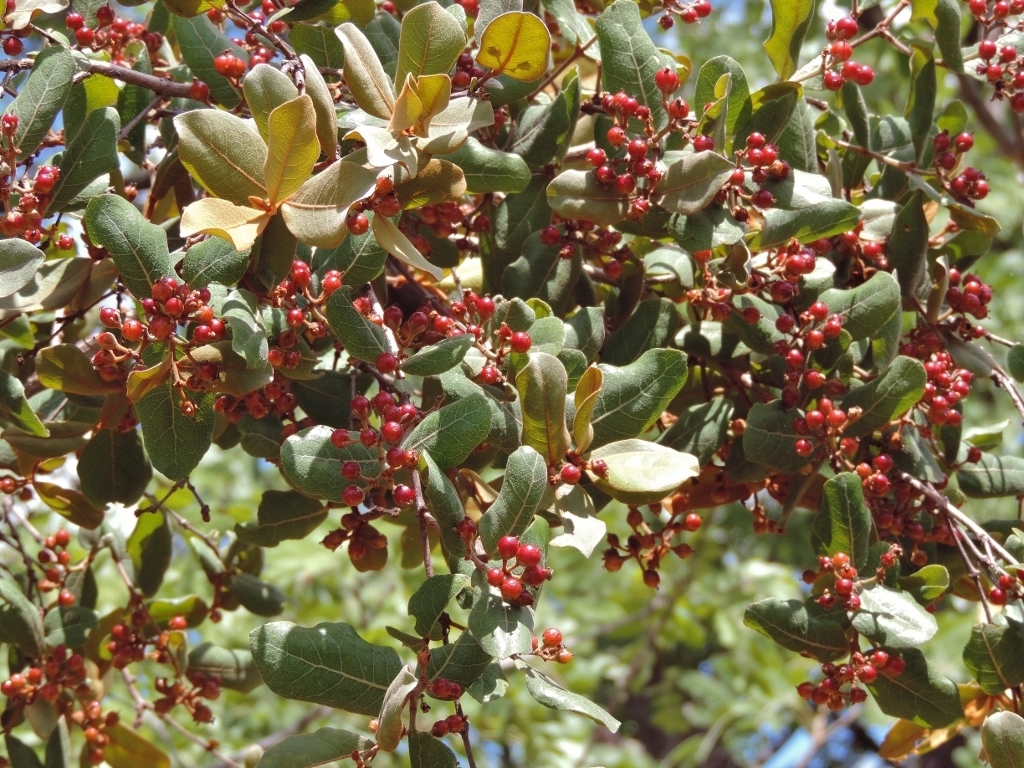
Psorospermum febrifugum
- Origin
- Africa
- Part used
- See detailed notebook
- Tradition
- Traditional ethnobotany
A shrub of the African savannas, Psorospermum febrifugum has long held a place of choice in the traditional pharmacopoeias of sub-Saharan Africa. Its very name evokes fever, which it was said to fight, while its bark and leaves served many skin remedies. The old healers considered it a versatile remedy, passed down through generations of local botanical knowledge.
Traditional uses
Traditional care for skin conditions
The bark and leaves, crushed or made into preparations, were traditionally applied to the skin to soothe various skin conditions, including dermatoses and wounds. This remains one of the best-documented uses in West and Central African pharmacopoeias.
Remedy against fever
Its vernacular name echoes an old use against feverish states, in the form of a bark or root decoction, in several African medicinal traditions.
Digestive troubles and dewormer
Some traditions report the use of root or bark decoctions to relieve digestive troubles and as a traditional dewormer.
Application on cuts and wounds
The sap or pulp of the fresh bark was sometimes applied locally to promote the healing of superficial wounds, according to traditional uses.
Before you use it
Traditional use is poorly documented by modern research; caution is warranted and the advice of a healthcare professional is recommended before any use. Certain species of the genus Psorospermum contain naphthoquinone compounds whose potential toxicity is not fully established. Not recommended for pregnant or breastfeeding women, nor for young children, for lack of sufficient safety data. Avoid any prolonged or high-dose use without guidance, particularly when applied to broken skin or taken internally.
The detailed notebook
- Prepared as a paste or decoction
- Traditional duration of use
- Known contraindications
- Related species and their uses
Where to find it
Partner herbalists — available with the detailed notebook.
Sources
PFAF