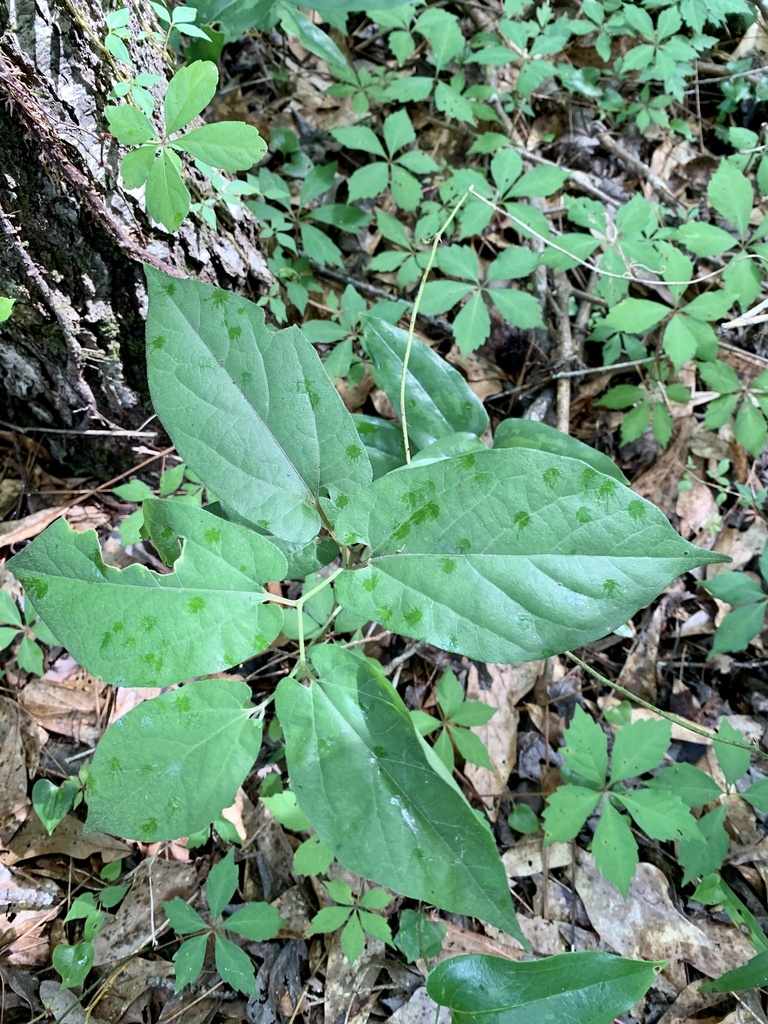
Virginia Snakeroot
- Origin
- North America
- Part used
- See detailed notebook
- Tradition
- Traditional ethnobotany
In the forests of eastern North America, Virginia snakeroot held a special place in the notebooks of the earliest herbalists and Indigenous healers, who held it in high esteem against snakebite — hence its name. It was later adopted by colonial pharmacopoeia, before gradually falling out of use amid doubts over its safety.
Traditional uses
Application on stings and bites
Traditionally, the crushed root or a poultice of it was applied to insect stings and various bites, a use that gave the plant its name among settlers and Indigenous peoples alike.
A traditional bitter stimulating the appetite
Used in very small amounts as a bitter, it was reputed in folk traditions to stimulate the appetite and support sluggish digestion.
Traditional support in case of fever
The root decoction was once among the folk remedies used to accompany feverish states, notably in nineteenth-century pharmacopoeia.
A controversial traditional use
Certain traditions report an old use linked to women's cycles, but this use is now strongly discouraged in light of current knowledge of the plant's toxicity.
Before you use it
Contains aristolochic acid, a substance recognized as nephrotoxic and carcinogenic: the plant is banned or strongly restricted in many countries. To be strictly avoided during pregnancy or breastfeeding, and in children. Never use internally for a prolonged period or at a high dose; internal use is now discouraged as a precaution. It is essential to consult a health professional before any use, even external application, owing to the risk of kidney damage.
The detailed notebook
- Prepared as a paste or decoction
- Traditional duration of use
- Known contraindications
- Related species and their uses
Where to find it
Partner herbalists — available with the detailed notebook.
Sources
PFAF, Wikipedia