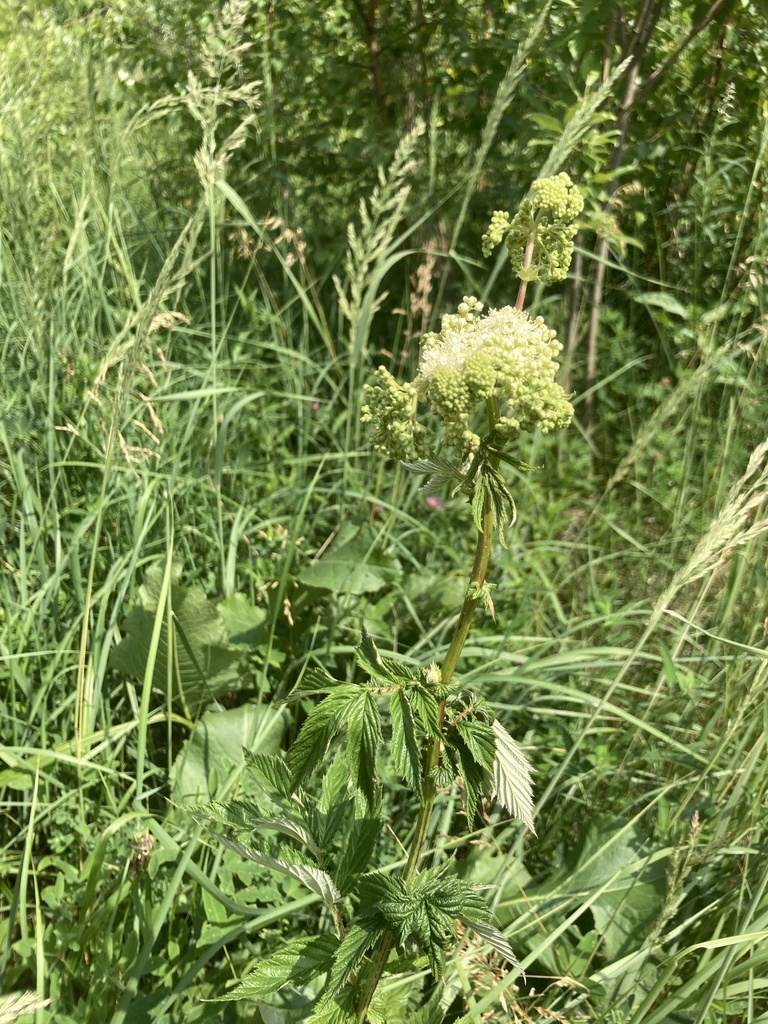
Meadowsweet
- Origin
- Europe
- Part used
- Leaves
- Tradition
- Traditional ethnobotany
In the damp meadows and along the rivers of Europe, meadowsweet unfurls its creamy flower clusters and sweet scent, which once earned it a place flavoring mead and wine. Herbalists of the past nicknamed it "bee herb" or "queen of the meadow," and gave it a place of honor among plants for the joints and the bladder. It was, in fact, from this very plant that the molecule behind aspirin was isolated in the 19th century.
Traditional uses
Traditional joint support
Meadowsweet leaf was traditionally infused to accompany joint discomfort and passing pain, as a gentle, everyday tea.
Urinary tract comfort
Used as a tea, it was said to promote urinary elimination and support bladder comfort in European folk tradition.
Light digestive comfort
It was also used as an infusion after meals, for its pleasant taste and its reputation as a gentle plant for the stomach.
A tea for seasonal chills
In the countryside, a meadowsweet tea traditionally accompanied mild feverish states and colds, as a warm, comforting drink.
Before you use it
Not advised in cases of known allergy to aspirin or salicylates, due to related compounds present in the plant. Avoid for pregnant or breastfeeding women, and for young children, due to insufficient data. Caution if taking anticoagulant or anti-inflammatory medication, due to possible interactions; consult a healthcare professional. Do not exceed traditional occasional use without professional advice, particularly in cases of kidney or liver conditions.
The detailed notebook
- Prepared as a paste or decoction
- Traditional duration of use
- Known contraindications
- Related species and their uses
Where to find it
Partner herbalists — available with the detailed notebook.
Sources
PFAF, PubMed, Wikipedia