Salvia africana-lutea
- Origin
- Africa
- Part used
- See detailed notebook
- Tradition
- Traditional ethnobotany
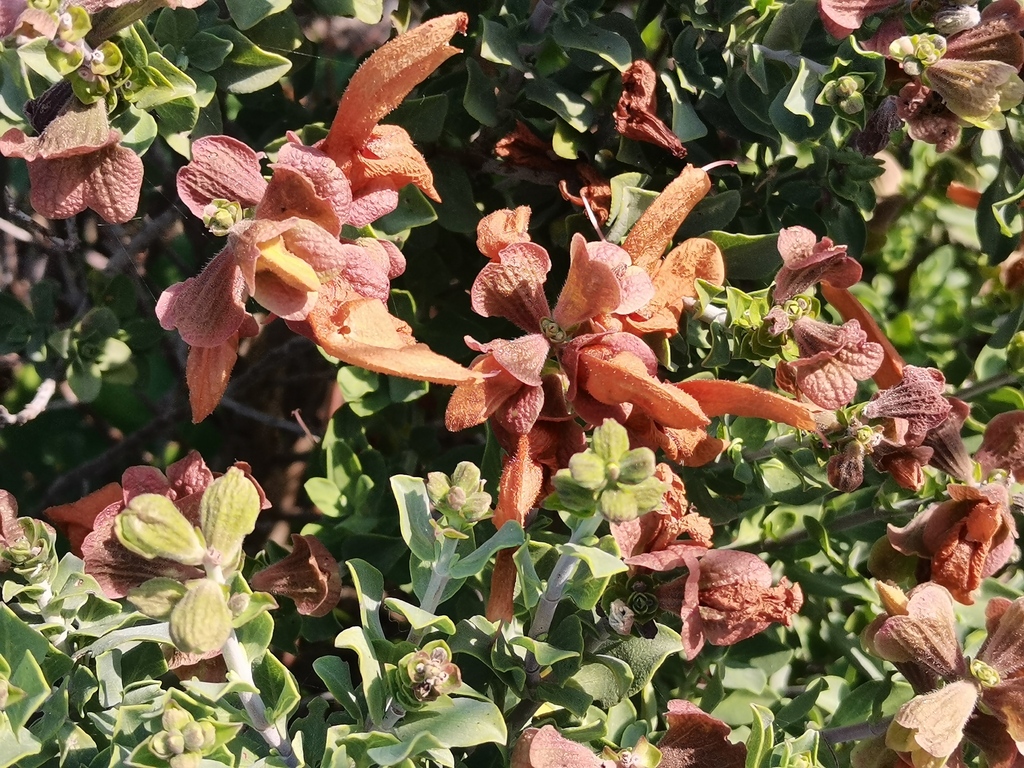
On the dry, windswept slopes of the Cape, golden sage unfurls its yellow-brown flowers and silvery-grey leaves, laden with a characteristic resinous scent. The Khoisan peoples and Cape settlers long used it as a tisane and in fumigation, crediting it with soothing, purifying virtues. It remains today an emblematic plant of the fynbos, passed down in South African folk use under the name "wilde salie."
Traditional uses
Supporting digestion
The leaf was traditionally infused to accompany heavy meals and ease mild digestive discomfort, in the manner of other sages.
Fumigation for the respiratory tract
The dried leaves were burned or steeped as steam to clear the respiratory tract during seasonal colds.
Washing and skin care
Used externally, a warm infusion traditionally served to wash irritated skin or rinse superficial wounds.
Calming evening tisane
Drunk as a tisane in the evening, golden sage was said to promote relaxation after a trying day.
Before you use it
Avoid prolonged or high-dose consumption, for lack of sufficient long-term safety studies. Not recommended for pregnant or breastfeeding women as a precaution, as with most sages. Seek the advice of a healthcare professional if undergoing medication treatment or a chronic condition. Reserve fumigation use for well-ventilated spaces.
The detailed notebook
- Prepared as a paste or decoction
- Traditional duration of use
- Known contraindications
- Related species and their uses
Where to find it
Partner herbalists — available with the detailed notebook.
Sources
PFAF, PubMed