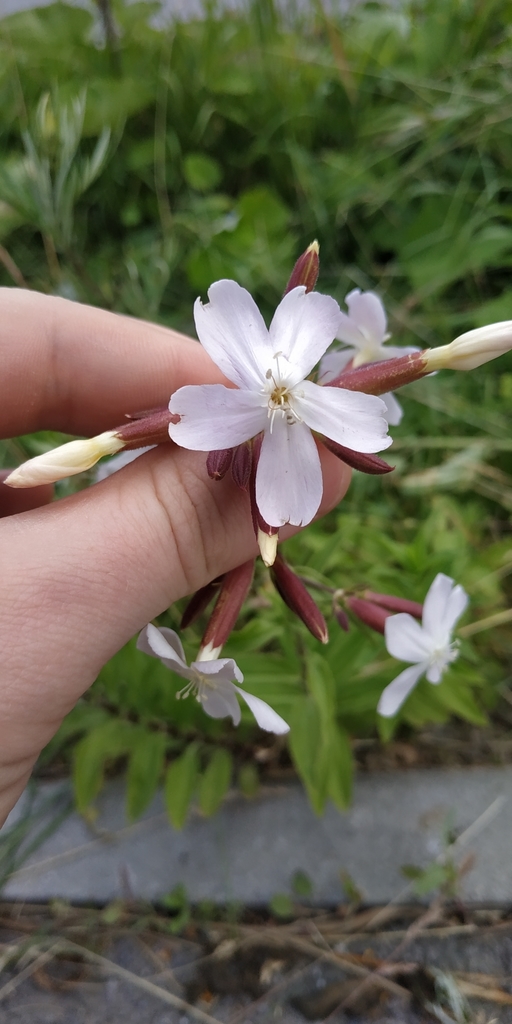
Common soapwort
- Origin
- Europe
- Part used
- Leaves
- Tradition
- Traditional ethnobotany
Called "soap herb" by the washerwomen of old, common soapwort owes its name to the smooth lather its roots and leaves produce on contact with water. This plant of hedgerows and roadsides once accompanied laundry, the skin, and sometimes coughing, in folk uses passed down from generation to generation.
Traditional uses
Before you use it
The saponins in the plant can irritate the digestive mucous membranes at high doses: nausea, vomiting, or diarrhea are possible with excessive internal use. Internal use is discouraged for pregnant or breastfeeding women, as well as young children, in the absence of sufficient safety data. Do not exceed small amounts and space out internal uses; if in doubt, seek the advice of a health professional or a qualified herbalist. Avoid any prolonged contact with the eyes, as the saponin-rich lather can irritate the ocular mucous membranes.
The detailed notebook
- Prepared as a paste or decoction
- Traditional duration of use
- Known contraindications
- Related species and their uses
Where to find it
Partner herbalists — available with the detailed notebook.
Sources
PFAF, Wikipedia