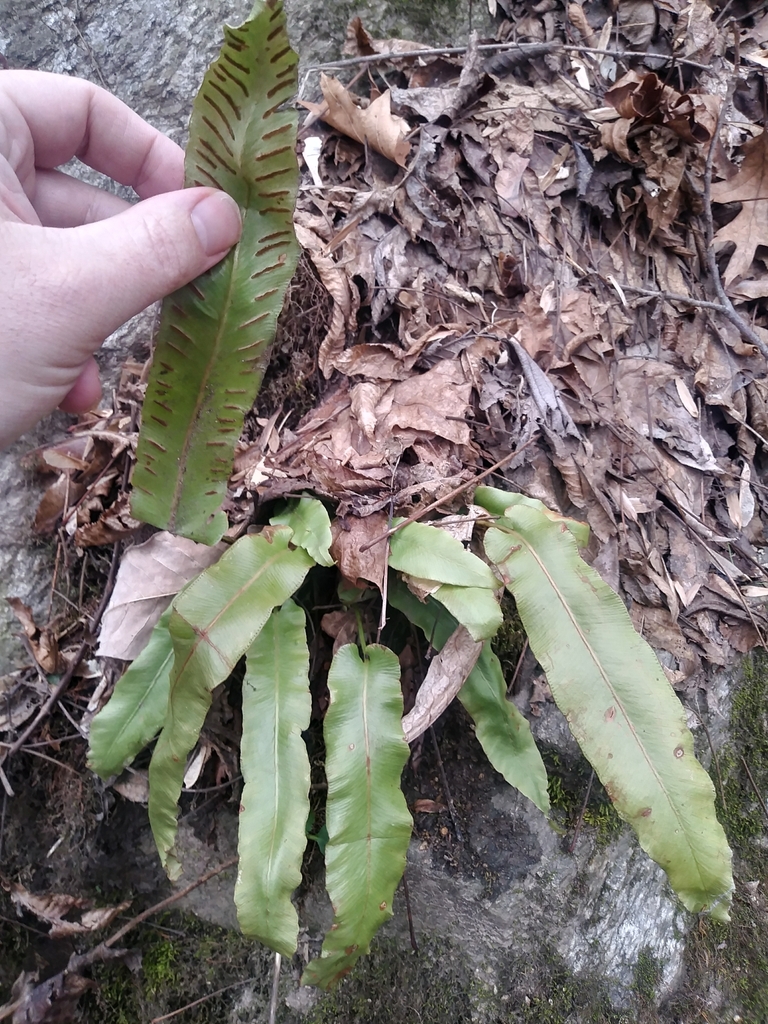
Hart's Tongue Fern
- Origin
- North America
- Part used
- See detailed notebook
- Tradition
- Traditional ethnobotany
A fern with entire, glossy fronds, hart's tongue fern takes its name from its resemblance to the centipede of the same name, its sori arranged in lines recalling insect legs. Long cultivated in shade gardens and gathered from old damp walls, it has figured since the Middle Ages among the simples meant to support a weakened body. Old herbalists of North America and Europe alike readily classed it among the "gentle ferns," less feared than their cousins with toxic spores.
Traditional uses
Traditional support for weariness
The frond decoction was traditionally drunk in a short course to accompany states of general fatigue and convalescence.
Soothing for the airways
Used as an herbal tea, hart's tongue fern was among the so-called pectoral plants, used to soothe an irritated throat and dry cough.
Traditional use for the liver and spleen
Old herbalists credited it with an action supporting the liver and spleen, hence its old nickname of "spleenwort."
Soothing local application
As a compress, the frond decoction was sometimes applied to the skin for its cooling and soothing effect.
Before you use it
Avoid any prolonged use without the advice of a health professional, as ferns in general may present toxicity if poorly prepared or consumed in excess. Use is discouraged during pregnancy or breastfeeding, and in young children, for lack of sufficient safety data. Do not confuse with other spore-bearing ferns, some of which are frankly toxic; ensure exact botanical identification before any harvest. If undergoing medication, seek advice from a health professional before any internal use.
The detailed notebook
- Prepared as a paste or decoction
- Traditional duration of use
- Known contraindications
- Related species and their uses
Where to find it
Partner herbalists — available with the detailed notebook.
Sources
PFAF, Wikipedia