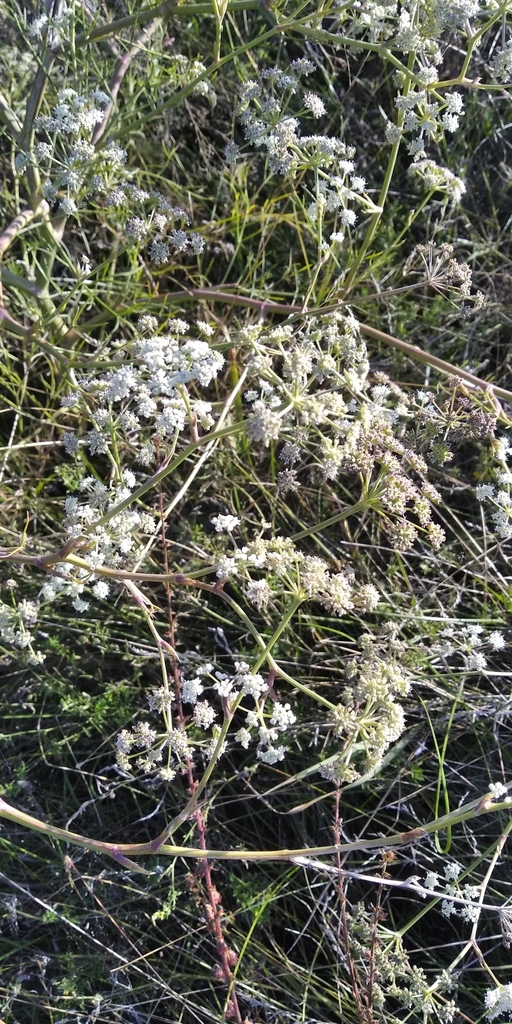
Seseli campestre
- Origin
- Europe
- Part used
- See detailed notebook
- Tradition
- Traditional ethnobotany
Field seseli is an unassuming umbellifer of Europe's dry meadows and limestone hillsides, long known to country herbalists for its aromatic seeds. Less famous than its cousins anise or fennel, it nonetheless held a modest place in folk uses related to digestion. Its use today belongs to a poorly documented rural tradition, one best approached with caution.
Traditional uses
Traditional aid for digestion
The seeds were sometimes chewed or infused after meals in parts of rural Europe, to ease digestive heaviness, in the manner of other aromatic umbellifers.
Traditional use for coughs
The root and seeds were reportedly used empirically in preparations meant to relieve coughing and respiratory ailments.
Old use linked to the menstrual cycle
Some old herbalist writings mention a traditional use of this plant related to the menstrual cycle, a use now poorly documented and to be approached with great caution.
Folk diuretic tradition
Like several wild umbellifers, it may have been used in folk teas reputed to promote urinary elimination.
Before you use it
A traditional use poorly documented by modern research: caution calls for consulting a health professional or a qualified herbalist before any use. A plant to be strictly avoided during pregnancy and breastfeeding because of its traditional use linked to the menstrual cycle, potentially hormonal or emmenagogue in action. Do not confuse it with other wild umbellifers, some of which are toxic; certain botanical identification is essential before any harvesting. Discouraged for children and for those undergoing medical treatment, for lack of data on possible interactions.
The detailed notebook
- Prepared as a paste or decoction
- Traditional duration of use
- Known contraindications
- Related species and their uses
Where to find it
Partner herbalists — available with the detailed notebook.
Sources
PFAF, Wikipedia