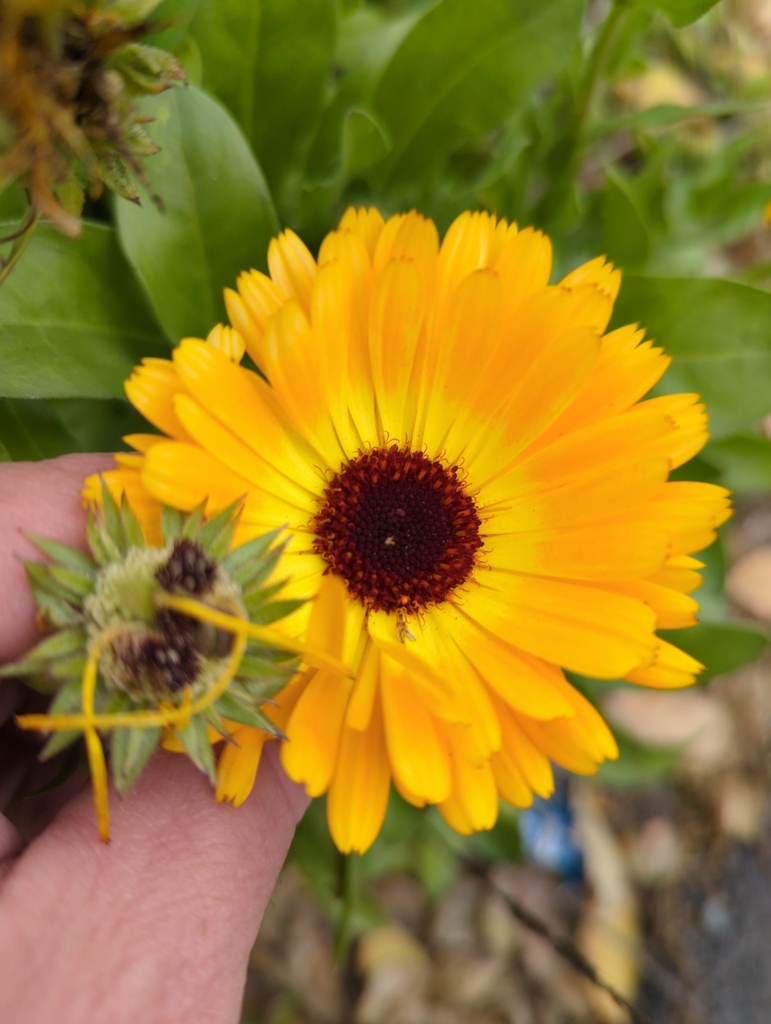
Pot Marigold
- Origin
- Europe
- Part used
- Leaves
- Tradition
- Traditional ethnobotany
In country gardens as in herbalists' notebooks, pot marigold has for centuries unfurled its bright orange flowers, valued for their soothing effect on the skin. People of the past readily called it the "flower of every month" for its almost continuous blooming, and credited it with watching over everyday minor wounds.
Traditional uses
Soothing minor skin irritations
Traditionally, marigold was applied as a compress or ointment to soothe irritated skin, minor cuts, and redness. Herbalists of the past considered it a plant of choice for supporting healing.
Light digestive support
As an infusion, marigold flowers and leaves were sometimes used to accompany difficult digestion, in European folk tradition.
Support for the menstrual cycle
Marigold was among the plants traditionally associated with women's comfort, particularly to accompany menstrual discomfort, according to old folk uses.
Gargles for the throat
As a gargle, marigold infusion was traditionally used to soothe irritation of the mouth and throat.
Before you use it
Not advised during pregnancy due to properties traditionally associated with an effect on the menstrual cycle. People allergic to plants in the daisy family (marguerite, chamomile, arnica...) should avoid it as a precaution. Prolonged or high-dose use is not documented as safe; it is recommended to seek a healthcare professional's advice before any regular use. Always do a skin patch test before local application, particularly for people with sensitive skin.
The detailed notebook
- Prepared as a paste or decoction
- Traditional duration of use
- Known contraindications
- Related species and their uses
Where to find it
Partner herbalists — available with the detailed notebook.
Sources
PFAF, Wikipedia