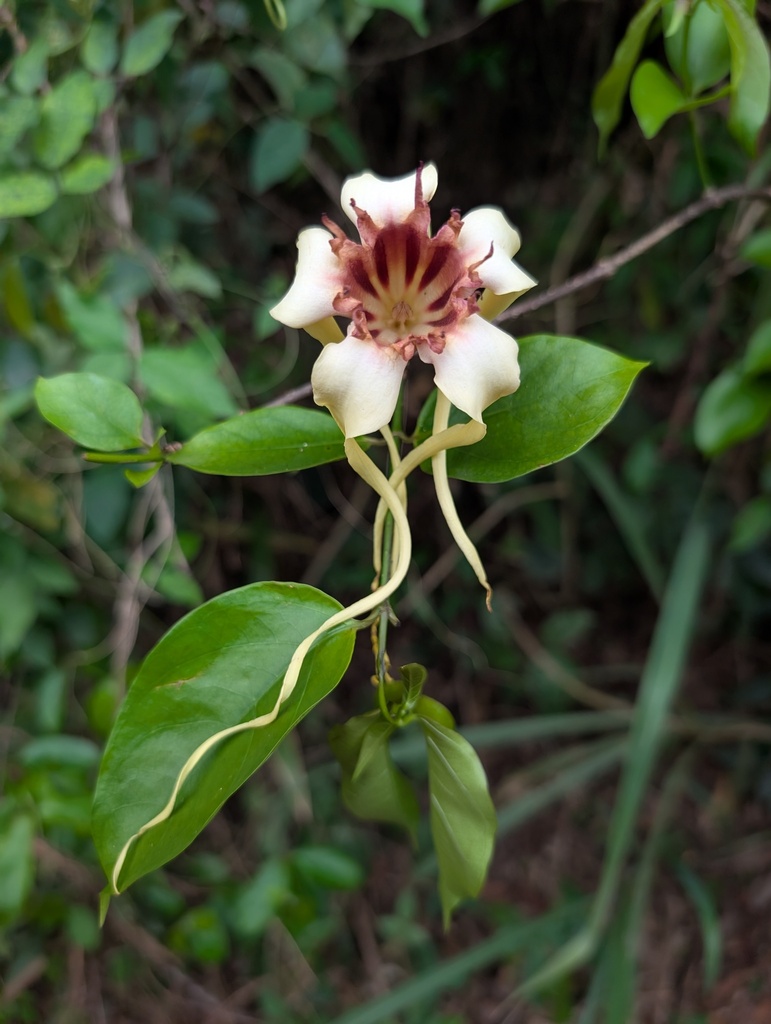
Strophanthus sarmentosus
- Origin
- Africa
- Part used
- See detailed notebook
- Tradition
- Traditional ethnobotany
A vine of the forests and savannas of West Africa, Strophanthus sarmentosus has been known for centuries by the region's peoples for the seeds of its slender, pod-like fruit, once used to make arrow poison feared by hunters. This old reputation alone signals a powerful plant, whose closely controlled traditional use was never taken lightly.
Traditional uses
Traditional heart tonic
The seeds, rich in cardiotonic glycosides close to those of foxglove, were used in traditional African medicine to support a weakened heart, a use later taken up briefly by Western pharmacopoeia in the form of isolated compounds.
Traditional arrow poison
Historically, the pulp of the crushed seeds went into the composition of arrow poison used by several West African peoples, a property that testifies to the potency of the plant's active compounds.
Traditional diuretic use
In certain local pharmacopoeias, very weak seed-based preparations were used to relieve swelling linked to heart failure, always under the supervision of an experienced traditional healer.
Traditional external use
External preparations based on bark or root have been reported for skin care or against certain parasites, though this use is far less documented than that of the seeds.
Before you use it
A highly toxic plant: the seeds contain powerful cardiotonic glycosides, with a very narrow therapeutic margin, that can cause cardiac arrest with incorrect dosing. Strictly discouraged in self-medication; any reported traditional use requires the guidance of an experienced practitioner and should never be reproduced alone. Contraindicated in cases of pre-existing heart conditions, pregnancy, breastfeeding, children, and in combination with any cardiotonic or diuretic treatment (serious interaction risk). Keep out of reach of children and animals; do not confuse the seeds with food seeds given their potentially lethal toxicity.
The detailed notebook
- Prepared as a paste or decoction
- Traditional duration of use
- Known contraindications
- Related species and their uses
Where to find it
Partner herbalists — available with the detailed notebook.
Sources
PFAF