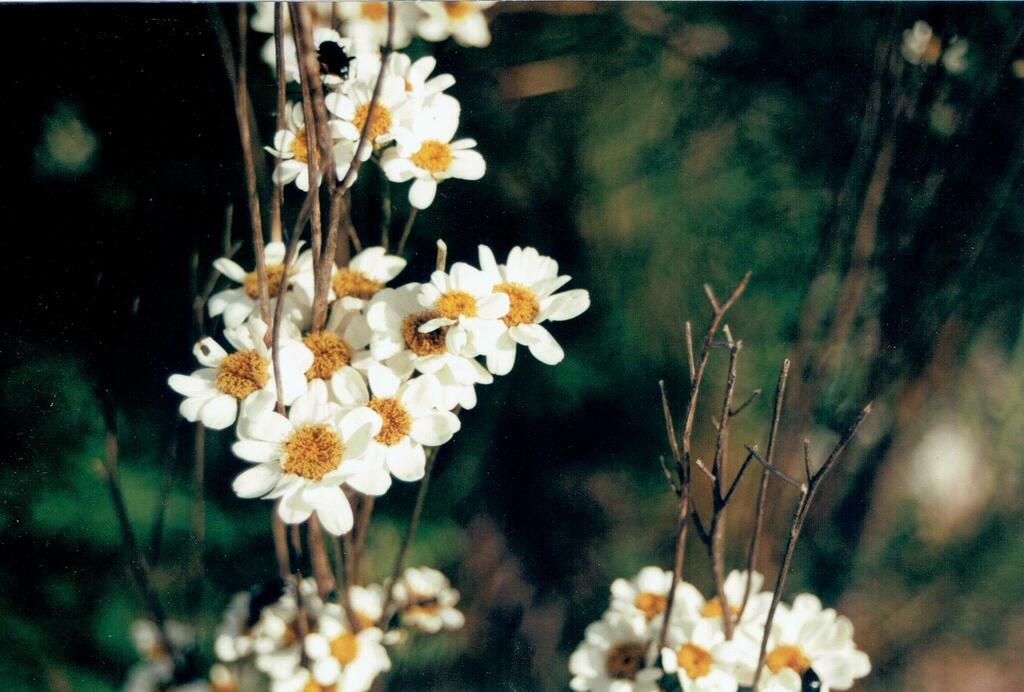
Tanacetum parthenium
- Origin
- Europe
- Part used
- See detailed notebook
- Tradition
- Traditional ethnobotany
Feverfew grows readily in gardens and along the paths of Europe, where it has been cultivated since antiquity for its bitter scent and the properties recognized by traditional herbalists. Its name, from the Latin febrifugia, "that drives away fever," attests to the old use made of it by women and folk healers. Long kept near homes, it belongs to that company of simple plants grown as much for healing as for warding off stubborn headaches.
Traditional uses
Traditional migraine relief
Feverfew is without doubt the plant most associated, in European folk tradition, with preventing recurrent migraines and headaches.
Traditional use for fevers
Its very name recalls the old use made of it to bring down fevers and help with flu-like states.
Support for menstrual pain
Country women traditionally used it to ease pain and irregularities related to the menstrual cycle.
Soothing external use
As a poultice, the plant was sometimes applied to insect bites and minor skin irritation.
Before you use it
Strictly discouraged during pregnancy because of its traditional emmenagogue use and risks to the uterus. To be avoided while breastfeeding, in children, and in people allergic to plants of the daisy family (daisies, chamomiles, arnica). May interact with anticoagulant or antiplatelet treatments: seek the advice of a health professional before any use. Stopping abruptly after prolonged use may bring on a withdrawal syndrome (headaches, stiffness); medical advice is recommended for any regular use.
The detailed notebook
- Prepared as a paste or decoction
- Traditional duration of use
- Known contraindications
- Related species and their uses
Where to find it
Partner herbalists — available with the detailed notebook.
Sources
PFAF, PubMed, Wikipedia