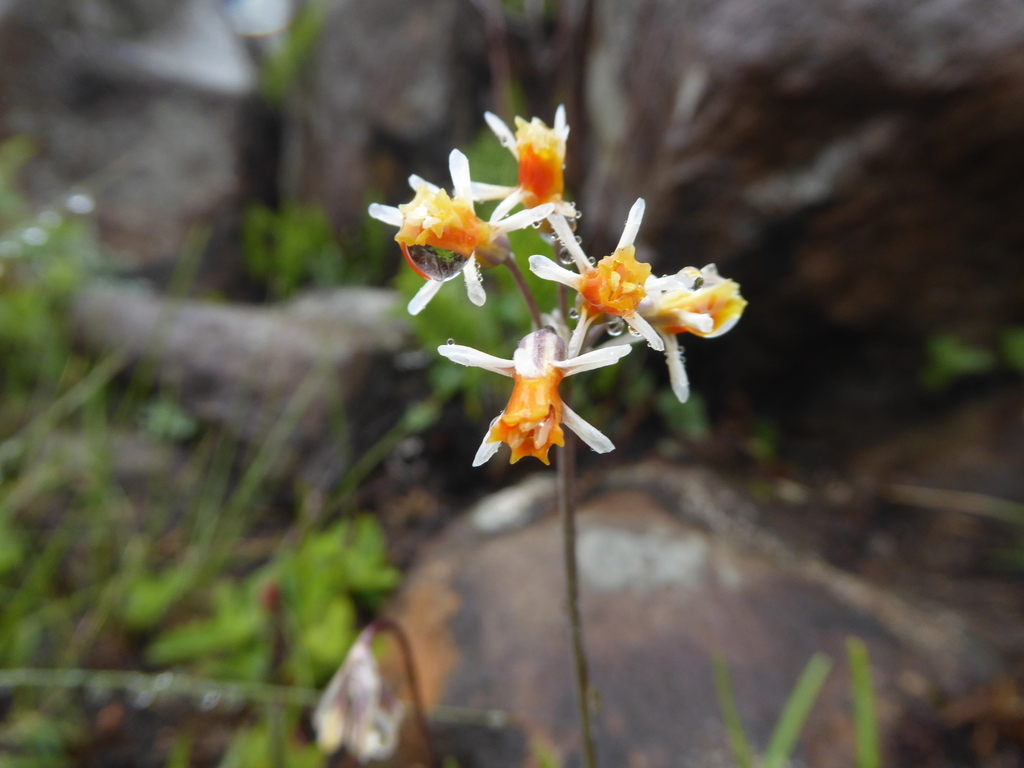
Tulbaghia montana
- Origin
- Africa
- Part used
- See detailed notebook
- Tradition
- Traditional ethnobotany
Native to the mountains of southern Africa, Tulbaghia montana belongs to the family of African "wild garlics" long praised by the region's peoples. A discreet cousin of cultivated garlic, it grows at altitude, among rocks and grassland, and has always been gathered by traditional herbalists for its fragrant bulb.
Traditional uses
Traditional respiratory support
The bulb, with its pronounced garlicky scent, was traditionally used in southern Africa to accompany respiratory conditions and flu-like illness.
Traditional digestive use
Like other Tulbaghia species, this plant was sometimes used in small quantities to support difficult digestion, according to orally transmitted folk uses.
Traditional application on the skin
The crushed or infused bulb was sometimes applied locally to the skin in certain local traditions, for skin-care purposes.
Additional traditional uses
In certain southern African communities, Tulbaghia species were also used in traditional veterinary care and in ritual or household protection practices.
Before you use it
Poorly documented scientifically: caution recommends reserving this plant for moderate, occasional traditional use, on the advice of a professional familiar with the plant. Like other alliaceous plants, it can interact with certain treatments (anticoagulants in particular) and irritate mucous membranes with excessive use. Discouraged in pregnant or breastfeeding women, as well as young children, for lack of sufficient safety data. Avoid any prolonged or high-dose internal use without the advice of a healthcare professional or experienced herbalist.
The detailed notebook
- Prepared as a paste or decoction
- Traditional duration of use
- Known contraindications
- Related species and their uses
Where to find it
Partner herbalists — available with the detailed notebook.
Sources
PFAF