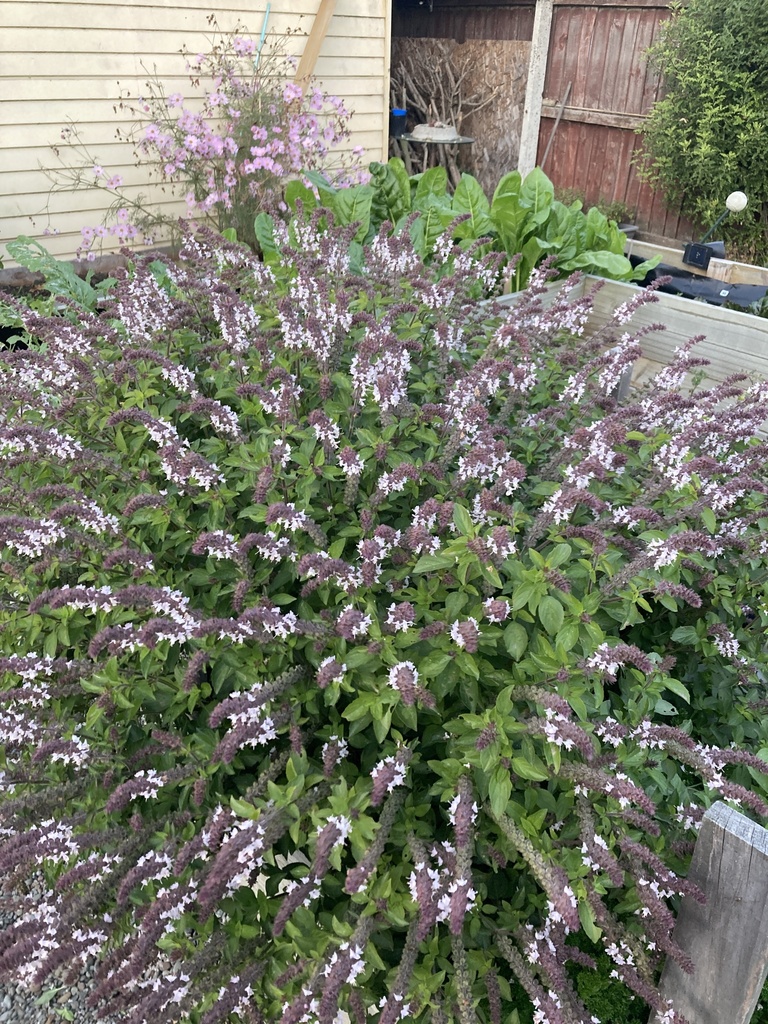
Tulsi
- Origin
- Asia
- Part used
- See detailed notebook
- Tradition
- Traditional ethnobotany
In India, Tulsi is called the "incomparable plant," and it traditionally stands in the courtyards of homes as well as at the threshold of temples. For thousands of years, Ayurvedic medicine has considered it an ally of the breath, a clear mind, and everyday vitality. This entry gathers the folk uses passed down around this sacred plant of South Asia.
Traditional uses
Traditional support against stress
Tulsi is traditionally classified among the so-called adaptogenic plants in Ayurveda, reputed to help the body better cope with everyday tension.
Respiratory comfort
Its infused leaves have long been used in India to help with colds, coughing, and congestion of the respiratory tract.
Traditional digestive aid
An infusion of fresh or dried leaves is traditionally drunk after meals to promote calm digestion.
A traditional tonic and purifier
In Ayurvedic tradition, Tulsi is considered a general tonic contributing to mental clarity and bodily balance.
What to know before use
Its use is not recommended during pregnancy and breastfeeding due to traditionally reported emmenagogue properties. Tulsi may interact with certain treatments, particularly anticoagulants and antidiabetics: seek the advice of a health professional if undergoing treatment. Prolonged or high-dose use is not recommended without the advice of a qualified practitioner. Avoid in people awaiting surgery, due to a possible effect on blood clotting.
The detailed notebook
- Prepared as a paste or decoction
- Traditional duration of use
- Known contraindications
- Related species and their uses
Where to find it
Partner herbalists — available with the detailed notebook.
Sources
PFAF, Wikipedia