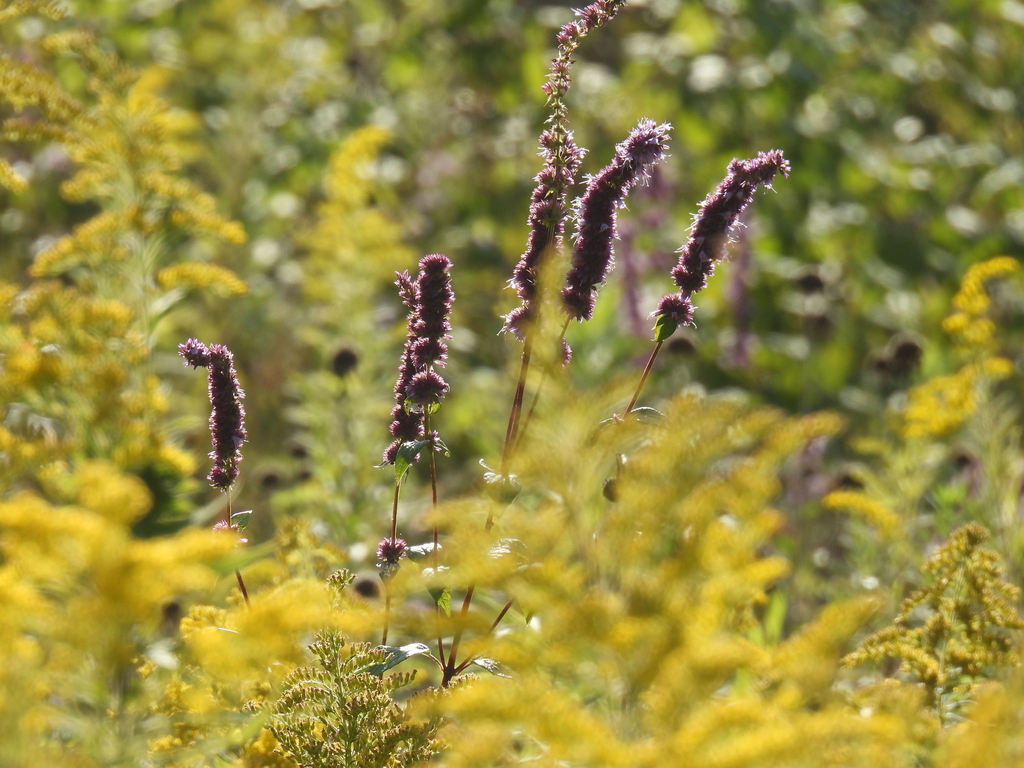
Agastache foeniculum
- Origin
- North America
- Part used
- See detailed notebook
- Tradition
- Traditional ethnobotany
Also called anise hyssop, Agastache foeniculum was grown and gathered by several Native American nations of the plains and forests of North America, particularly to scent herbal teas and to honor ceremonies. Its anise and licorice scent made it a precious plant, both a companion of the home and a ritual offering. Even today, it graces herbalists' gardens for its aromatic sweetness and its soothing traditional use.
Traditional uses
A calming evening tea
The leaves, infused, were traditionally drunk in the evening to promote relaxation and support peaceful sleep.
Support for digestion
Like other plants of the mint family, anise hyssop was used as a tea after meals to ease mild digestive discomfort.
Comfort for the airways
Some Native American traditions report the use of anise hyssop as an infusion to help with coughing and mild colds.
A ceremonial, aromatic plant
Used dried as a fumigation or in a bouquet, it accompanied certain ceremonies and was also used to scent living spaces.
Before you use it
Avoid in case of known allergy to plants of the mint family (mint, sage, etc.). As a precaution, use in pregnant or breastfeeding women and young children should remain moderate and be discussed with a health professional. Do not confuse it with other, less documented Agastache species that have different traditional uses.
The detailed notebook
- Prepared as a paste or decoction
- Traditional duration of use
- Known contraindications
- Related species and their uses
Where to find it
Partner herbalists — available with the detailed notebook.
Sources
PFAF