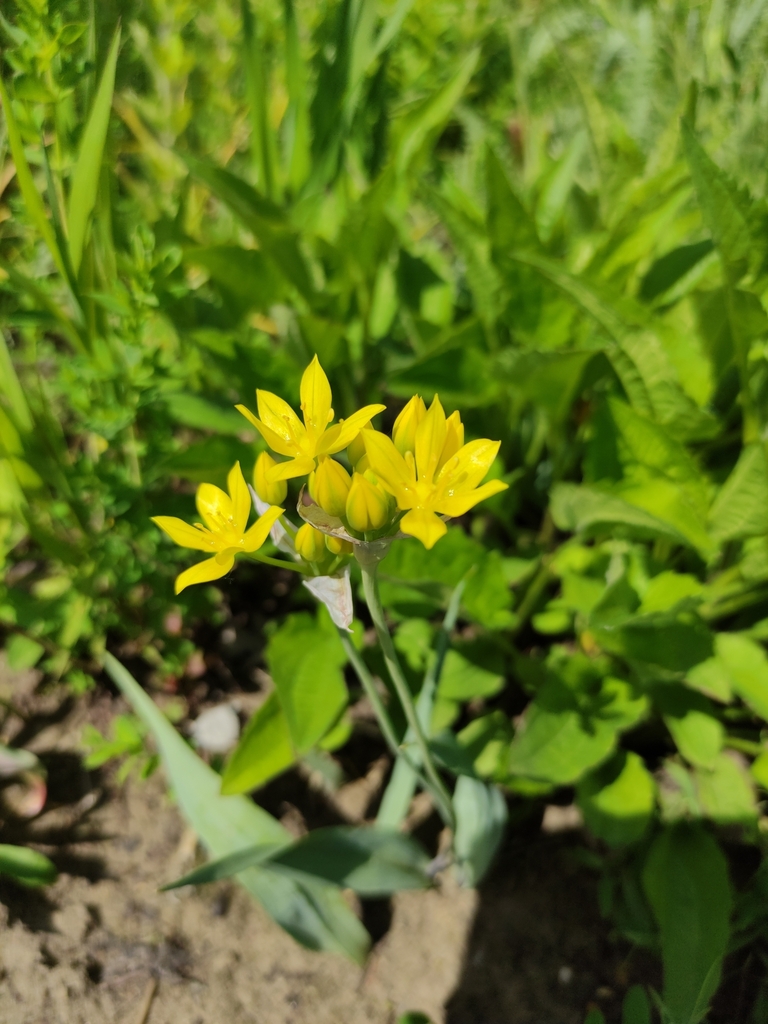
Golden Garlic
- Origin
- Europe
- Part used
- See detailed notebook
- Tradition
- Traditional ethnobotany
Golden garlic, with its umbels of bright yellow flowers, has long adorned the gardens and banks of southern Europe. Less well known than its cousin common garlic, it nonetheless shares with the allium family certain traditionally recognized virtues, although its use is mostly ornamental and a matter of botanical anecdote.
Traditional uses
Mild digestive support
Like other alliums, the bulb is said to have been used occasionally in small amounts to accompany difficult digestion, according to loosely documented local folk uses.
Traditional use against colds
By analogy with common garlic, certain rural traditions report an occasional use of the bulb for colds or congestion, though this use is not as well documented as for Allium sativum.
Companion plant in the vegetable garden
Golden garlic has long been planted at the edges of crops, tradition crediting it with a protective role against certain pests and a knack for beautifying flowerbeds.
Empirical remedy for livestock
In some rural areas, the bulb was occasionally given in very small amounts to domestic animals, as part of a folk-medicine practice now abandoned.
Before you use it
Allium moly is far less documented than common garlic, and its internal use is not recommended without the advice of a qualified professional. Like several Allium species, it can be toxic to pets (dogs, cats) and should be kept out of their reach. To be avoided in pregnant or breastfeeding women and in children, due to a lack of reliable data. Do not confuse with other wild bulbs when foraging; some related species are toxic.
The detailed notebook
- Prepared as a paste or decoction
- Traditional duration of use
- Known contraindications
- Related species and their uses
Where to find it
Partner herbalists — available with the detailed notebook.
Sources
PFAF