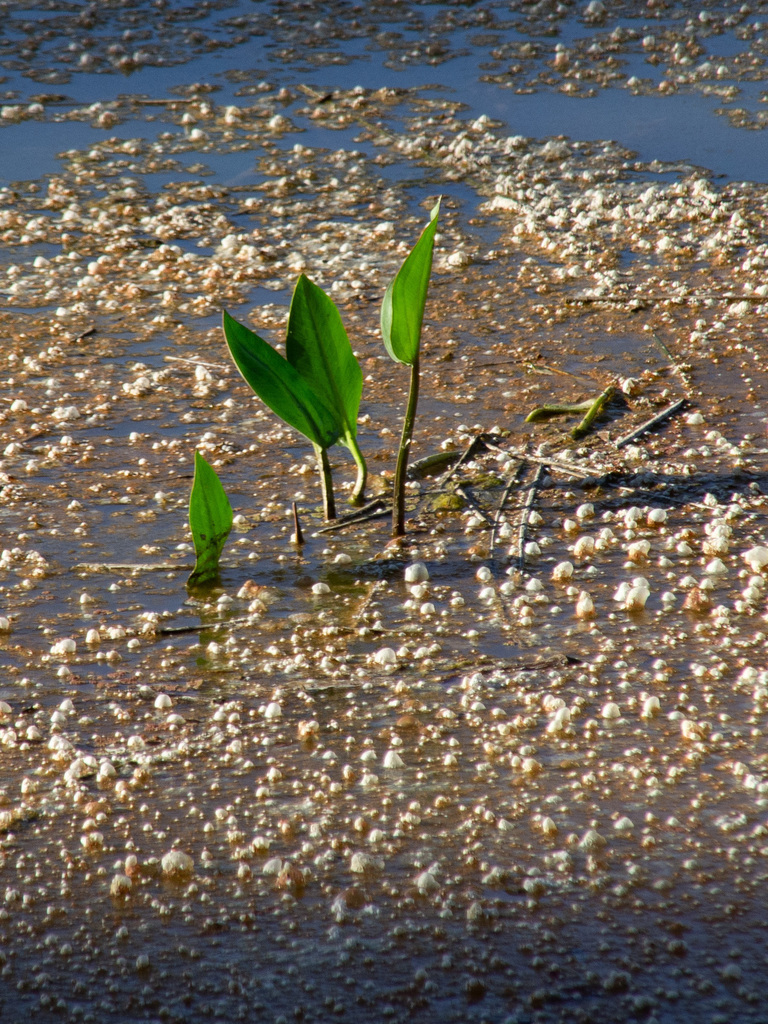
Alisma plantago-aquatica
- Origin
- Europe
- Part used
- Leaves, Root
- Tradition
- Traditional ethnobotany
Water plantain, or Alisma plantago-aquatica, grows along the ponds and ditches of Europe, where its spike of white flowers and lance-shaped leaves have caught the attention of herbalists since antiquity. In Chinese tradition, as in certain European herbalist notebooks, its dried root (close to the Ze Xie used in Chinese medicine) was especially sought after to address excess dampness in the body.
Traditional uses
Support for the urinary tract
The dried root was traditionally used to promote urinary elimination and relieve feelings of heaviness or water retention.
Digestive comfort and internal dampness
In traditional Chinese medicine, the root (Ze Xie) is used to drain what is described as excess dampness, often associated with bloating or heavy digestion.
Soothing external use
Fresh leaves were sometimes applied as a poultice to the skin to soothe mild irritations, according to local folk uses.
Easing mild inflammation
The root, as a decoction, was traditionally associated with calming certain internal inflammatory conditions, particularly at the kidney level.
Before you use it
Not recommended during pregnancy and breastfeeding, as the plant is traditionally considered to act on body fluids and the kidneys. Do not use in children without the advice of a qualified healthcare professional. Prolonged use or high doses can disrupt fluid and mineral balance; the advice of a professional trained in herbal medicine or traditional Chinese medicine is recommended before any use. Avoid in cases of diuretic treatment or pre-existing kidney disease, due to a risk of interaction or worsening.
The detailed notebook
- Prepared as a paste or decoction
- Traditional duration of use
- Known contraindications
- Related species and their uses
Where to find it
Partner herbalists — available with the detailed notebook.
Sources
PFAF, Wikipedia