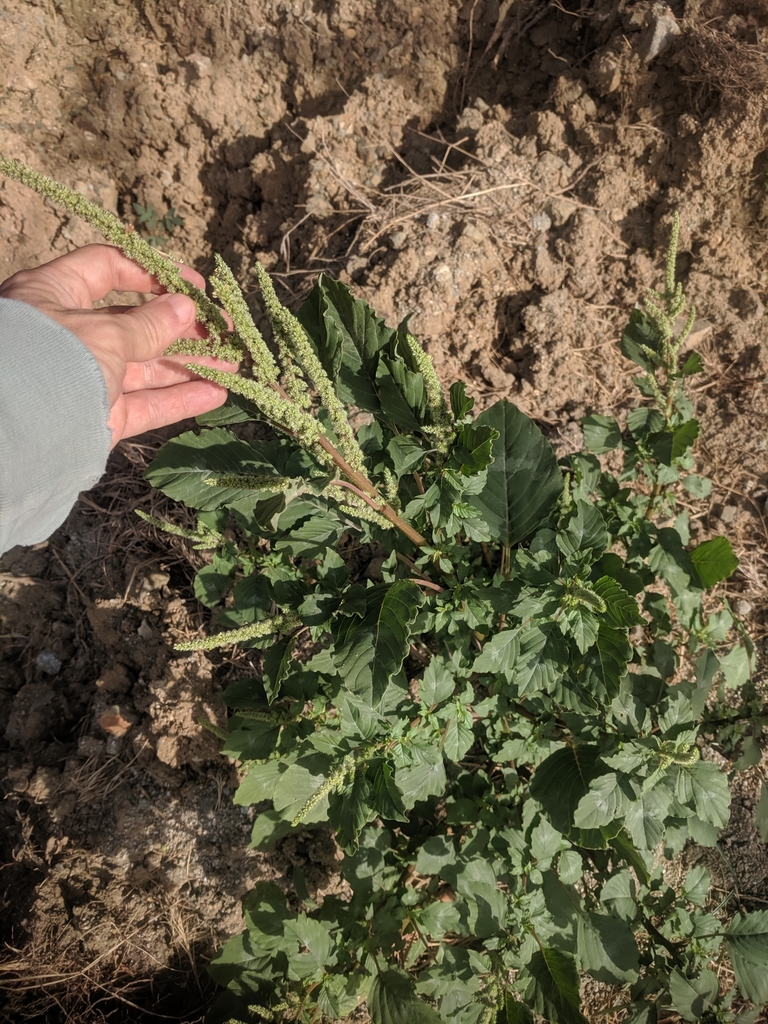
Amaranthus dubius
- Origin
- Africa
- Part used
- See detailed notebook
- Tradition
- Traditional ethnobotany
Amaranthus dubius, a cousin of the amaranths cultivated around the world, grows readily in the gardens and wastelands of Africa, where it has long been gathered as a nourishing leafy vegetable. The ancients knew how to recognize in its tender leaves both a precious food resource and a simple everyday remedy.
Traditional uses
Leaves used for digestive comfort
The cooked or infused leaves were traditionally consumed to help with and soothe difficult digestion.
A restorative leafy vegetable
Consumed as an everyday food, amaranth was reputed to be fortifying, particularly during periods of convalescence or fatigue.
A traditional use as a local application
Crushed leaves were sometimes applied as a poultice on the skin to soothe minor superficial irritation.
Traditional support for lactation
In certain African traditions, consuming amaranth was associated with supporting lactation in breastfeeding women.
What to know before use
Like many amaranths, the leaves can contain oxalates and nitrates, particularly if the plant grows in soil rich in nitrogen fertilizers; proper cooking is traditionally recommended before eating large amounts. People prone to kidney stones or following a low-oxalate diet should consult a professional before regular consumption. Avoid gathering near polluted or treated areas, as the plant tends to accumulate nitrates and heavy metals from the soil. For any use other than ordinary food (poultice, prolonged use), the advice of a health professional remains recommended.
The detailed notebook
- Prepared as a paste or decoction
- Traditional duration of use
- Known contraindications
- Related species and their uses
Where to find it
Partner herbalists — available with the detailed notebook.
Sources
PFAF