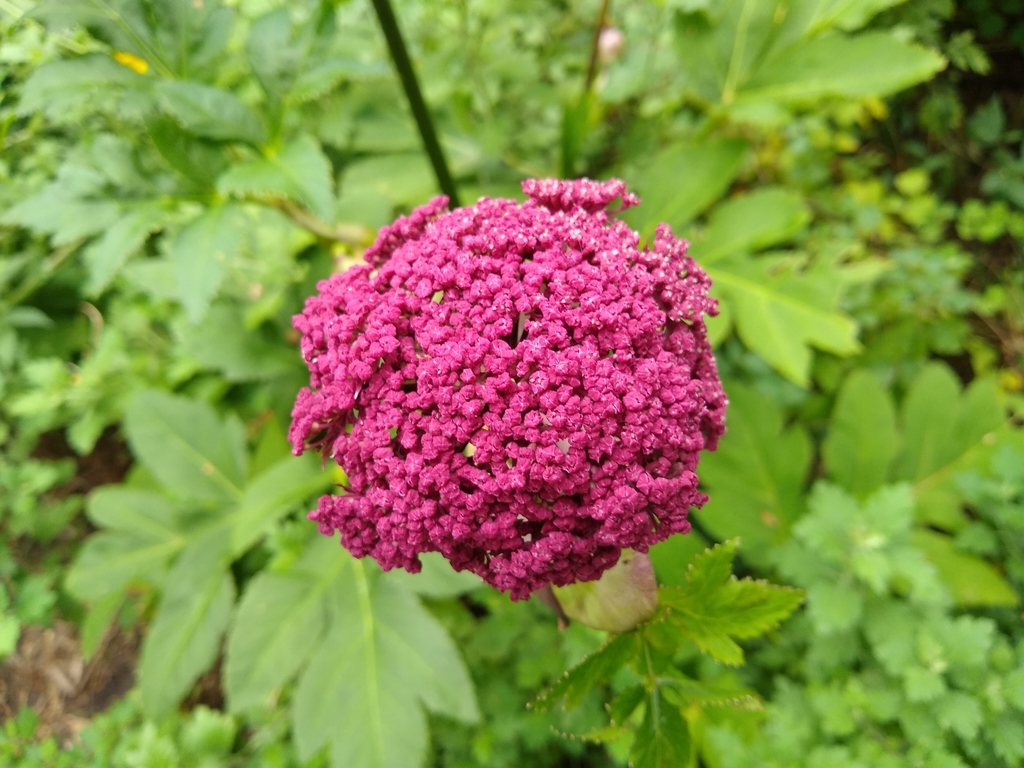
Angelica gigas
- Origin
- Asia
- Part used
- See detailed notebook
- Tradition
- Traditional ethnobotany
In the mountains of the Korean peninsula, purple angelica — locally called "dang-gui" — has held a place of honor in traditional pharmacopeia for centuries. Its gnarled, fragrant root, tinged dark red, was reserved for women and for bodies weakened by fieldwork or harsh winters. Traditional Korean herbalists considered it a plant that "warms the blood."
Traditional uses
Relief of joint pain
The dried root was traditionally used as a decoction to relieve joint stiffness and pain, particularly in the elderly or after intense physical exertion.
Support for the female cycle
In traditional Korean medicine, this angelica is among the so-called "female" plants, used to help with menstrual discomfort and blood circulation.
A fortifier after fatigue or illness
It was combined with other tonic roots to help the body recover after convalescence or a period of exhaustion.
Support for blood circulation
Traditional herbalists credited it with the ability to promote good circulation, particularly in cold extremities.
What to know before use
Not recommended during pregnancy and breastfeeding due to its action traditionally associated with the female cycle. May interact with anticoagulant or antiplatelet treatments; seek the advice of a health professional before any use. Photosensitizing: avoid prolonged sun exposure after significant application or consumption. Use not recommended for children or during ongoing hormonal treatment.
The detailed notebook
- Prepared as a paste or decoction
- Traditional duration of use
- Known contraindications
- Related species and their uses
Where to find it
Partner herbalists — available with the detailed notebook.
Sources
PFAF, Wikipedia