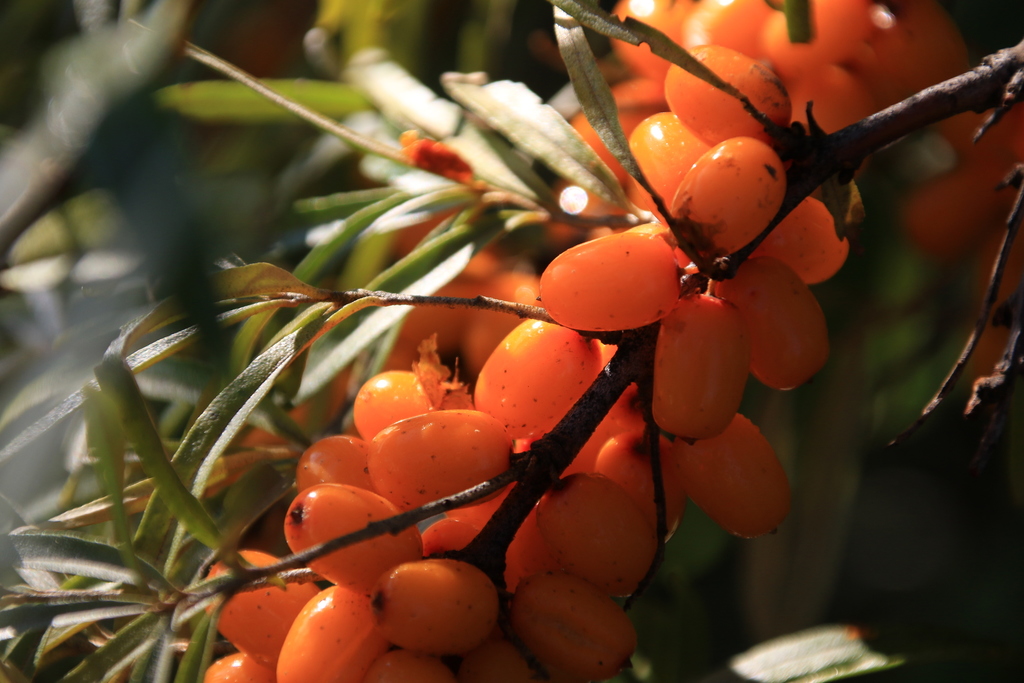
Sea buckthorn
- Origin
- Europe
- Part used
- See detailed notebook
- Tradition
- Traditional ethnobotany
Sea buckthorn, a thorny shrub of Europe's and Asia's shorelines and stony riverbanks, was once nicknamed ‘the gold of the sands’ for the brilliance of its orange berries. The peoples of the steppes and cold coasts harvested its tart fruits from autumn onward, storing them to see them through the winter. Its oil and berries have long held a place of honor in the folk traditions of Northern and Eastern Europe.
Traditional uses
Winter support
The berries, very rich in vitamin C, were traditionally consumed in winter to support a tired body and help see it through the change of season.
Care for dry, damaged skin
Oil drawn from the berries and seeds was applied to dry, chapped, or irritated skin, a practice inherited from the traditions of Eastern Europe and Central Asia.
Light digestive comfort
The juice or decoction of the berries was used in folk practice to ease sluggish digestion and soothe the mucous membranes.
Soothing the mucous membranes
As a mouthwash or syrup, sea buckthorn juice was traditionally used to soothe an irritated throat.
Before you use it
The very acidic berries can irritate the stomach if consumed in excess or in people with a sensitive stomach. Sea buckthorn oil may interact with certain anticoagulant treatments; seek a healthcare professional's advice if you are on medication. Avoid prolonged internal use without professional advice during pregnancy or breastfeeding, for lack of sufficient data. Always dilute the pure juice before drinking it, given its pronounced acidity.
The detailed notebook
- Prepared as a paste or decoction
- Traditional duration of use
- Known contraindications
- Related species and their uses
Where to find it
Partner herbalists — available with the detailed notebook.
Sources
PFAF