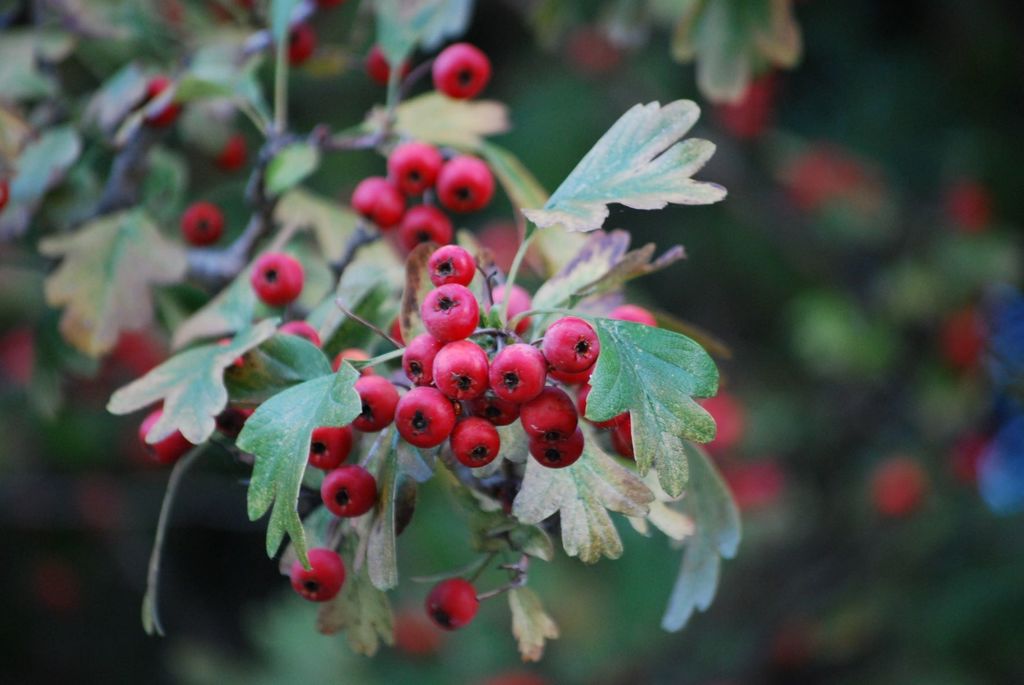
Hawthorn
- Origin
- Europe
- Part used
- See detailed notebook
- Tradition
- Traditional ethnobotany
A shrub of hedgerows and woodland edges, hawthorn has accompanied life in the European countryside for centuries. It was once nicknamed "the heart tree," as old herbalists credited it with the power to soothe emotions and support vitality in the elderly. Its fragrant white flowers and red berries, known as haws, lie at the heart of this tradition.
Traditional uses
Traditional heart support
Hawthorn has long been regarded in Europe as a plant that supports the heart, traditionally used to accompany palpitations and a sense of a tired heart.
Nervous and emotional calm
The flowers were traditionally infused to calm the nerves, encourage peaceful sleep, and soothe strong emotions, particularly in anxious people.
A companion for older age
In herbalist notebooks, hawthorn traditionally accompanied people advancing in age, as general support for vitality.
Berries as jam and jelly
Once cooked, haws were traditionally turned into nourishing jellies and jams, enjoyed in late autumn.
Before you use it
Not advised alongside heart treatments (digoxin, beta-blockers, anticoagulants) without medical advice, due to possible interactions. Not recommended without supervision for pregnant or breastfeeding women. Any known heart condition requires prior medical advice before prolonged use. Avoid self-medicating in cases of low blood pressure or ongoing treatment.
The detailed notebook
- Prepared as a paste or decoction
- Traditional duration of use
- Known contraindications
- Related species and their uses
Where to find it
Partner herbalists — available with the detailed notebook.
Sources
Wikipedia