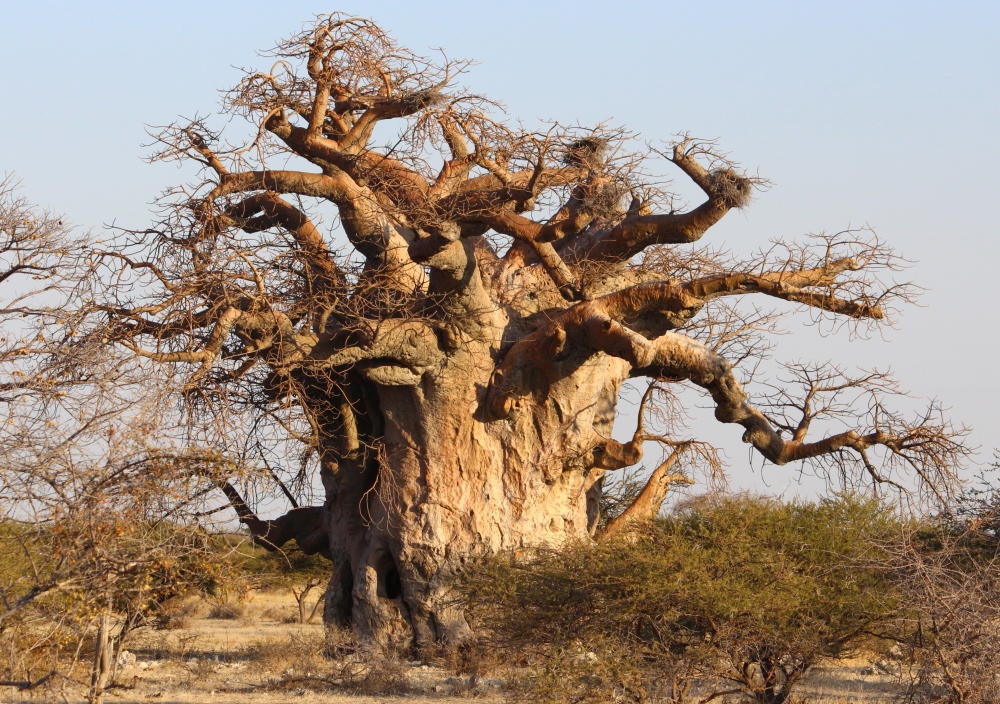
Baobab
- Origin
- Africa
- Part used
- Leaves, Root
- Tradition
- Traditional ethnobotany
Beneath the vast African savannas, the baobab has stood for centuries as a world-tree, at once a source of food, shade, and remedy. The ancients saw in it a pillar of life around which villages gathered, and every part of the tree found its place in everyday uses. The leaves, in particular, were reputed to support people's health during difficult seasons.
Traditional uses
Traditional digestive support
Baobab leaves were traditionally consumed as a decoction to soothe mild digestive troubles and help digestion after meals.
Help with feverish states
In several regions of West Africa, a decoction of leaves or root bark was used as a traditional aid during episodes of fever.
Traditional skin care
Preparations made from leaves were applied locally to soothe certain skin irritation, according to uses reported in traditional African pharmacopeia.
A tonic for vitality
The nutrient-rich leaves were traditionally incorporated into the diet as general support for vitality, particularly during periods of famine.
What to know before use
The use of the root remains little documented by modern science and presents uncertainties as to its composition and effects; it is not recommended to use it without the advice of a health professional trained in African plants. Preparations made from root or bark are to be avoided in pregnant or breastfeeding women, for lack of sufficient safety data. If undergoing medication treatment, seek the advice of a health professional before any use, particularly for concentrated preparations. Do not give root-based preparations to young children without medical supervision.
The detailed notebook
- Prepared as a paste or decoction
- Traditional duration of use
- Known contraindications
- Related species and their uses
Where to find it
Partner herbalists — available with the detailed notebook.
Sources
Wikipedia