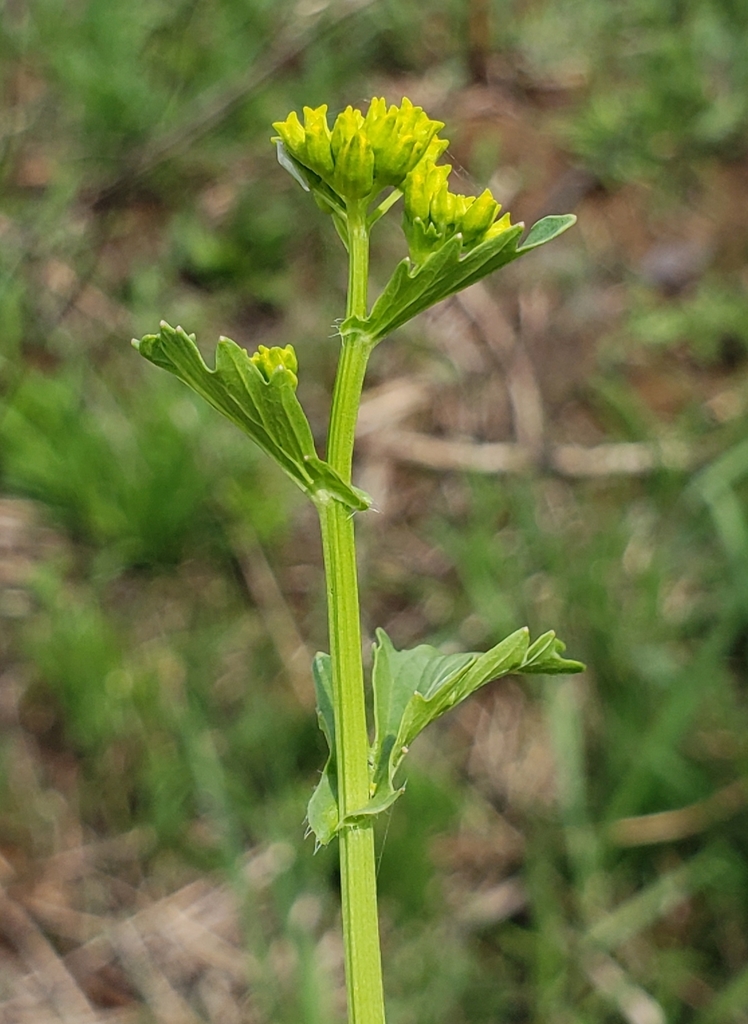
Barbarea vulgaris
- Origin
- Europe
- Part used
- See detailed notebook
- Tradition
- Traditional ethnobotany
Barbarea vulgaris, which our ancestors also called Saint Barbara's herb, brightened banks and vegetable gardens from late winter onward. A cousin of cabbages and cresses, it was long gathered as one of the season's first fresh greens, both food and folk remedy.
Traditional uses
A stimulating bitter green
The young leaves, with a peppery flavor close to cress, were traditionally eaten raw to awaken the appetite and support digestion as winter ended.
Late-winter tonic
Rich in bitter principles and considered fortifying, Barbarea vulgaris was among the first wild salad greens believed to revive the body after the cold season, like other wild crucifers.
Folk use as a poultice
In certain rural traditions, crushed leaves were applied as a poultice to minor skin irritations, according to a loosely documented local use.
A spring cleansing plant
Like many wild crucifers, it was part of spring cures thought to 'purify the blood,' eaten in small amounts as a young shoot.
Before you use it
Only eat young leaves, in small amounts: older leaves become very bitter and can irritate the digestive system. Avoid prolonged use or large amounts, as with most wild crucifers rich in sulfur compounds. Avoid in pregnant or breastfeeding women, due to insufficient data, and in young children. Identify the plant carefully before harvesting, as it can be confused with other wild crucifers; when in doubt, abstain.
The detailed notebook
- Prepared as a paste or decoction
- Traditional duration of use
- Known contraindications
- Related species and their uses
Where to find it
Partner herbalists — available with the detailed notebook.
Sources
PFAF