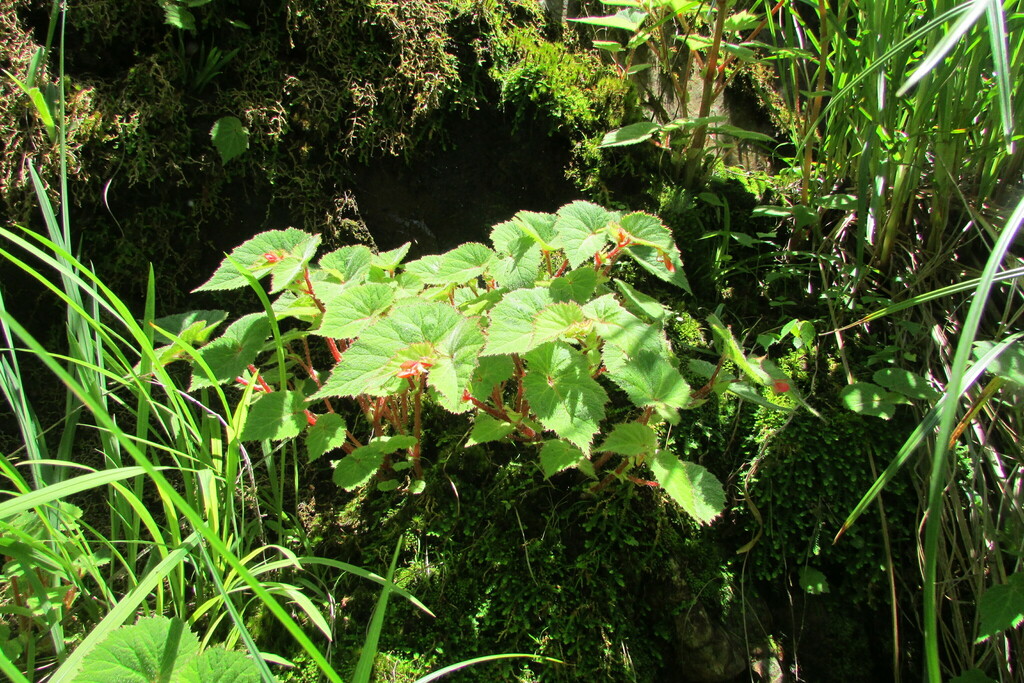
Begonia sutherlandii
- Origin
- Africa
- Part used
- See detailed notebook
- Tradition
- Traditional ethnobotany
Native to the mountains of Southern Africa, particularly the Drakensberg, Begonia sutherlandii has long adorned gardens and rockeries for its delicate foliage and orange flowers. While its reputation is mainly ornamental, certain begonia species have found, in local folk traditions, modest uses related to the tart freshness of their tissues. These uses nonetheless remain little documented and should be considered with the caution proper to oral knowledge passed down from generation to generation.
Traditional uses
Soothing freshness on the skin
The sap and fleshy stems, rich in oxalic acid, are said to have been applied locally by certain communities for their cooling sensation on minor skin irritation.
Traditional tart flavor
Like other edible begonias, the tart-flavored stems and flowers are said to have sometimes been chewed or sparingly added to preparations to stimulate salivation.
An ornamental garden plant
Long before any internal use, Begonia sutherlandii was mainly cultivated for its beauty, adorning mountain gardens and sometimes associated with welcoming rituals in certain Southern African cultures.
Use as an occasional tart vegetable
In certain regions, the young shoots are said to have been eaten cooked, in the manner of a wild sorrel, for their refreshing tart taste.
What to know before use
Begonias contain oxalic acid in variable amounts; excessive consumption is not recommended, particularly for people suffering from kidney stones or gout. Internal use is not recommended for pregnant or breastfeeding women, for lack of sufficient data. Do not use in children without the advice of a health professional. If in doubt about identifying the species, refrain from any consumption, as certain ornamental begonias are not intended for food use.
The detailed notebook
- Prepared as a paste or decoction
- Traditional duration of use
- Known contraindications
- Related species and their uses
Where to find it
Partner herbalists — available with the detailed notebook.
Sources
PFAF