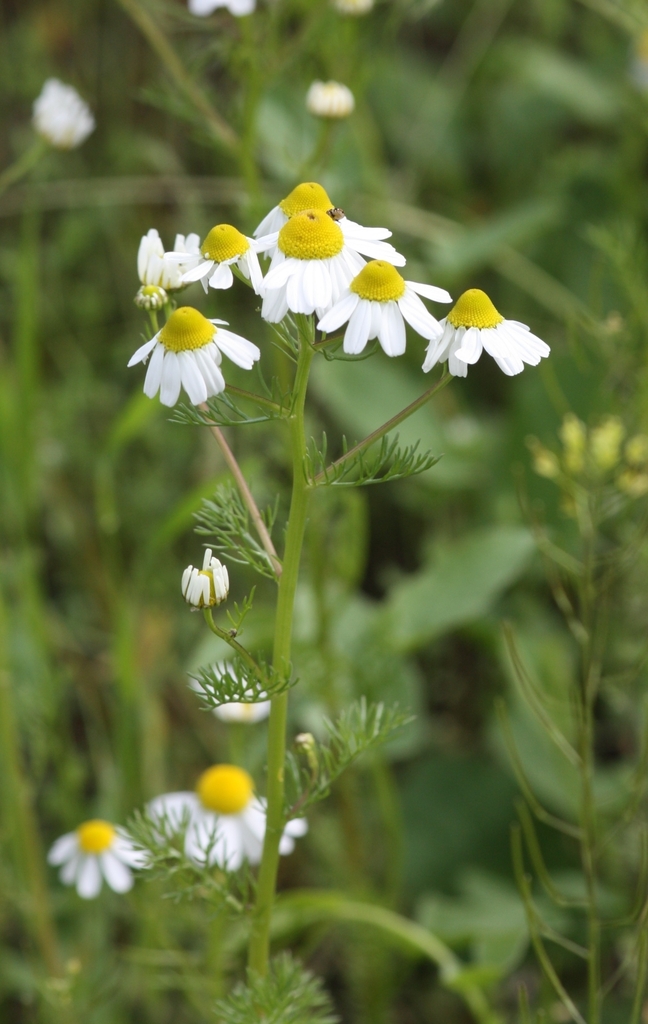
Chamomile
- Origin
- Europe
- Part used
- Flowers
- Tradition
- Traditional ethnobotany
Since ancient Egypt, where it was dedicated to the sun god Ra, chamomile has been a familiar and reassuring presence in European herbalism. Its small white, gold-hearted flowers have passed through the centuries, found in parsons' gardens as in our grandmothers' notebooks, always linked to rest and a settled stomach.
Traditional uses
Traditional aid to falling asleep
An evening infusion is a long-standing tradition for encouraging relaxation and helping with falling asleep, particularly in restless children.
Digestive comfort after meals
Chamomile was commonly taken as a tea after meals to relieve digestive discomfort, bloating, and mild intestinal spasms.
Soothing the skin externally
In compresses or baths, chamomile has traditionally been used to soothe irritated skin, minor redness, and tired eyes.
Inhalation to clear the airways
Chamomile steam inhalation was traditionally used to clear the airways during mild colds.
Before you use it
People allergic to plants in the daisy family (Asteraceae — marguerite, arnica, marigold) should be cautious, as cross-reactions are possible. Prolonged or high-dose use is not advised without the guidance of a healthcare professional, particularly for pregnant or breastfeeding women. If taking medication (anticoagulants in particular), consult a pharmacist or doctor before regular use. Always strain preparations carefully before use around the eyes, to avoid any irritating residue.
The detailed notebook
- Prepared as a paste or decoction
- Traditional duration of use
- Known contraindications
- Related species and their uses
Where to find it
Partner herbalists — available with the detailed notebook.
Sources
Wikipedia