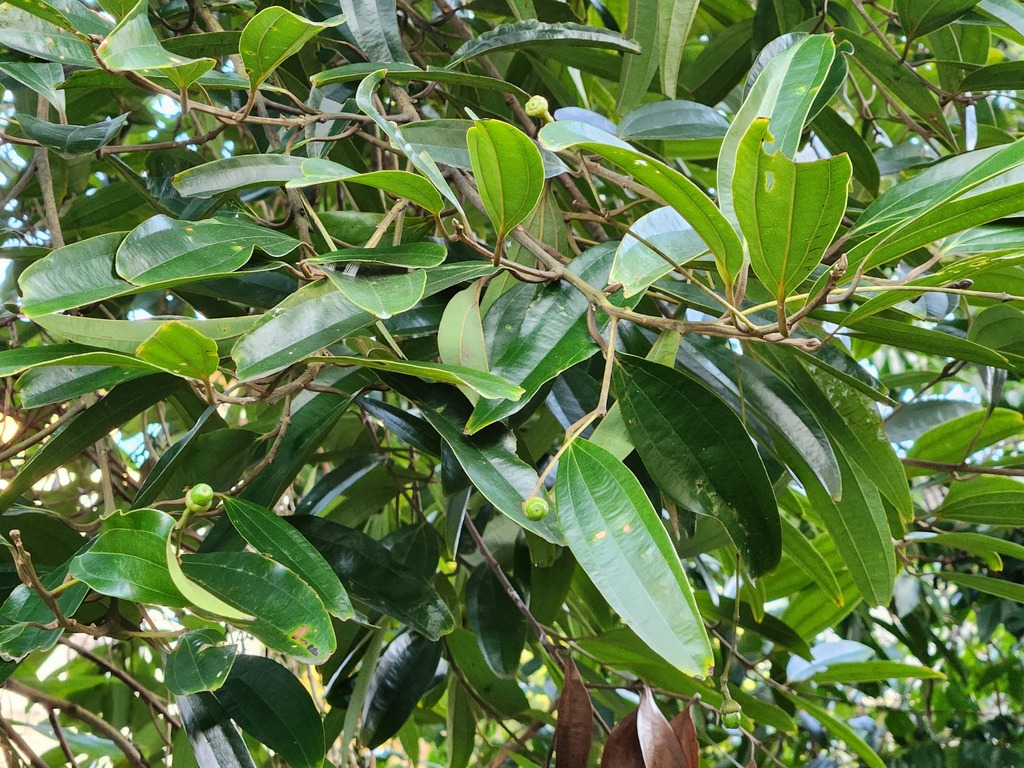
Chinese Cinnamon
- Origin
- Asia
- Part used
- Leaves, Bark
- Tradition
- Traditional ethnobotany
In the old herbals of China, the fragrant bark of Cinnamomum cassia — called Gui Zhi or Rou Gui depending on the part used — was considered a warming plant, able to heat the body and revive circulation. Used for millennia in traditional Chinese pharmacopeia, it accompanied both home remedies and culinary preparations, so appreciated was its woody, slightly sweet fragrance.
Traditional uses
Digestive support
The bark was traditionally infused to soothe digestive heaviness, bloating, and sensations of cold in the stomach.
Warming the body
In traditional Chinese medicine, Chinese cinnamon was used to stimulate blood circulation and combat sensations of cold in the extremities.
Support during colds
It was used as a decoction, often combined with other plants, to help with colds and the onset of a cold.
Mild soothing
Traditionally, a bark tea was sometimes taken in the evening to bring a feeling of warmth and comfort conducive to relaxation.
What to know before use
Not recommended during pregnancy due to properties traditionally considered uterine stimulants. Avoid prolonged or high-dose use: the coumarin naturally present in the bark can affect the liver. Do not combine without medical advice with anticoagulant or hypoglycemic treatments, due to possible interactions. Use in children and breastfeeding women should only occur on the advice of a health professional.
The detailed notebook
- Prepared as a paste or decoction
- Traditional duration of use
- Known contraindications
- Related species and their uses
Where to find it
Partner herbalists — available with the detailed notebook.
Sources
PubMed, Wikipedia