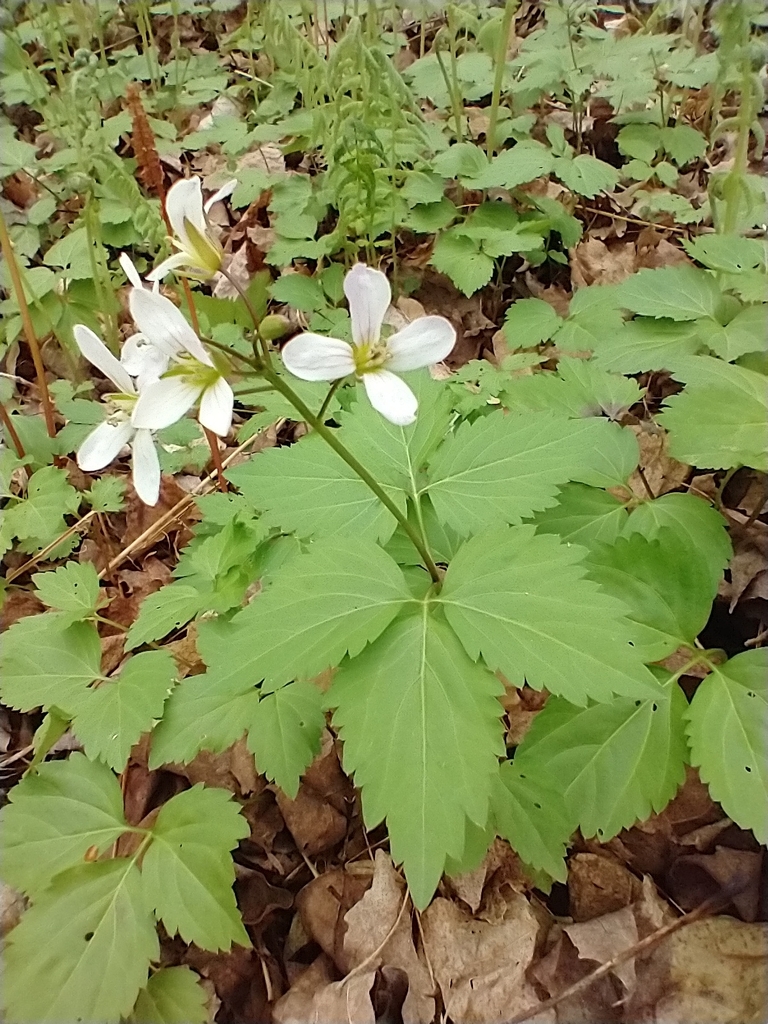
Crinkleroot
- Origin
- North America
- Part used
- Leaves, Whole plant, Root
- Tradition
- Traditional ethnobotany
Known to the Indigenous peoples of northeastern North America as "carcajou" and as "toothwort" among English-speaking settlers, Cardamine diphylla grows quietly on the floor of damp forests. Its root, with a peppery taste recalling horseradish or watercress, was valued as much as a condiment as a remedy for the season.
Traditional uses
An appetite stimulant
The fresh root, grated and mixed into food, was traditionally used to sharpen the appetite and aid digestion, in the manner of horseradish.
Support for colds
Certain Indigenous communities ate the peppery root to clear the airways during seasonal colds.
A use as a compress
The whole plant, made into a poultice, was sometimes applied to minor skin irritation according to local traditional uses.
A tonic condiment root
Eaten raw or lightly cooked, the root served as a tonic condiment in the spring diet of the First Peoples.
Before you use it
Eat the root in moderation: its peppery taste, close to mustard, can irritate sensitive mucous membranes in large amounts. Avoid in cases of a sensitive stomach or inflammatory digestive trouble, as the plant belongs to the mustard family, known for its irritating sulfur compounds. As the traditional use is poorly documented by modern research, it is recommended to seek the advice of a health professional before any regular or prolonged use. Harvest with discernment: this forest-floor plant can be locally rare and deserves respectful, limited gathering.
The detailed notebook
- Prepared as a paste or decoction
- Traditional duration of use
- Known contraindications
- Related species and their uses
Where to find it
Partner herbalists — available with the detailed notebook.
Sources
PFAF, Wikipedia