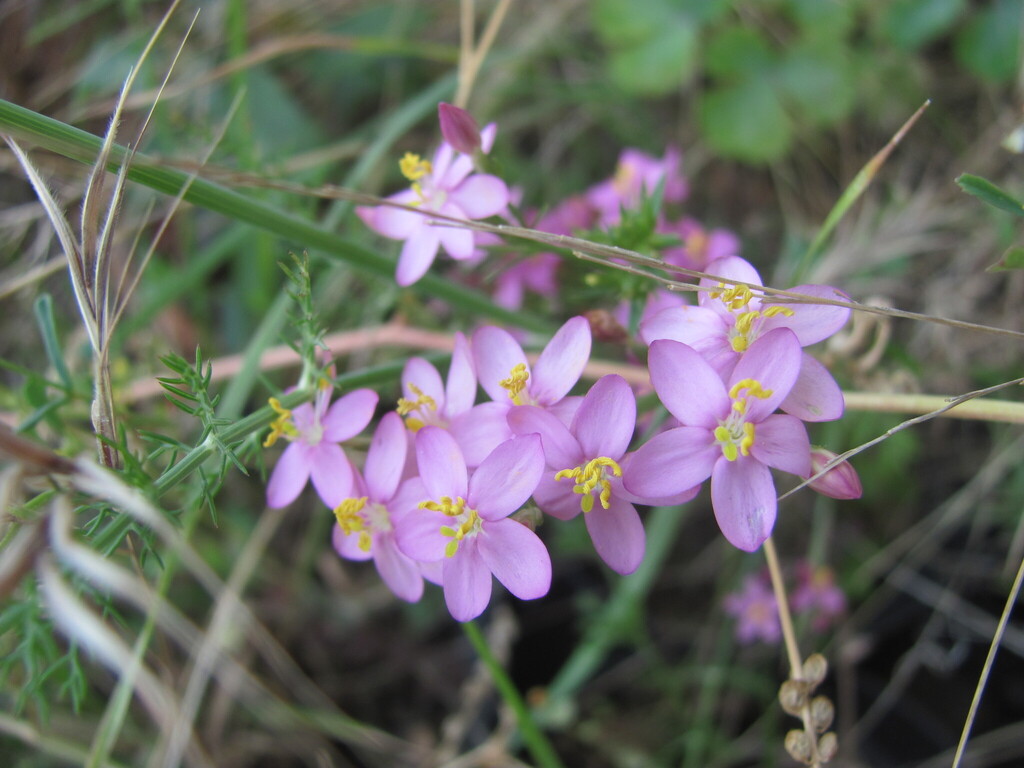
Centaurium erythraea
- Origin
- Europe
- Part used
- See detailed notebook
- Tradition
- Traditional ethnobotany
Common centaury, a humble plant of dry meadows and European hedgerows, was long ranked among the herbalist's great bitters. Its very name recalls Chiron the Centaur, the mythical healer, so enduring was its tonic reputation across the centuries. Old apothecary records readily cited it alongside gentian, to open the appetite and support digestion.
Traditional uses
Appetite stimulation
Herbalist tradition credits the bitterness of common centaury with the ability to stimulate digestive secretions and open the appetite, in the manner of Europe's great bitter plants.
Digestive support after meals
Taken as a herbal tea after meals, it was traditionally used to help with slow digestion and a feeling of heaviness.
A folk fever remedy of old
In the countryside, centaury was among the bitter plants used for mild fevers and convalescence, taken internally in diluted form.
A general bitter tonic
Used in short courses, it was reputed to restore vigor to a tired body, in keeping with traditional bitter tonics.
Before you use it
Not advised in cases of active gastric or duodenal ulcer, due to its strong bitterness stimulating gastric secretions. To be avoided during pregnancy or breastfeeding, for lack of sufficient safety data. Do not continue the cure beyond a few weeks without the advice of a healthcare professional. If taking medication, seek advice from a pharmacist or doctor before regular use.
The detailed notebook
- Prepared as a paste or decoction
- Traditional duration of use
- Known contraindications
- Related species and their uses
Where to find it
Partner herbalists — available with the detailed notebook.
Sources
PFAF, PubMed