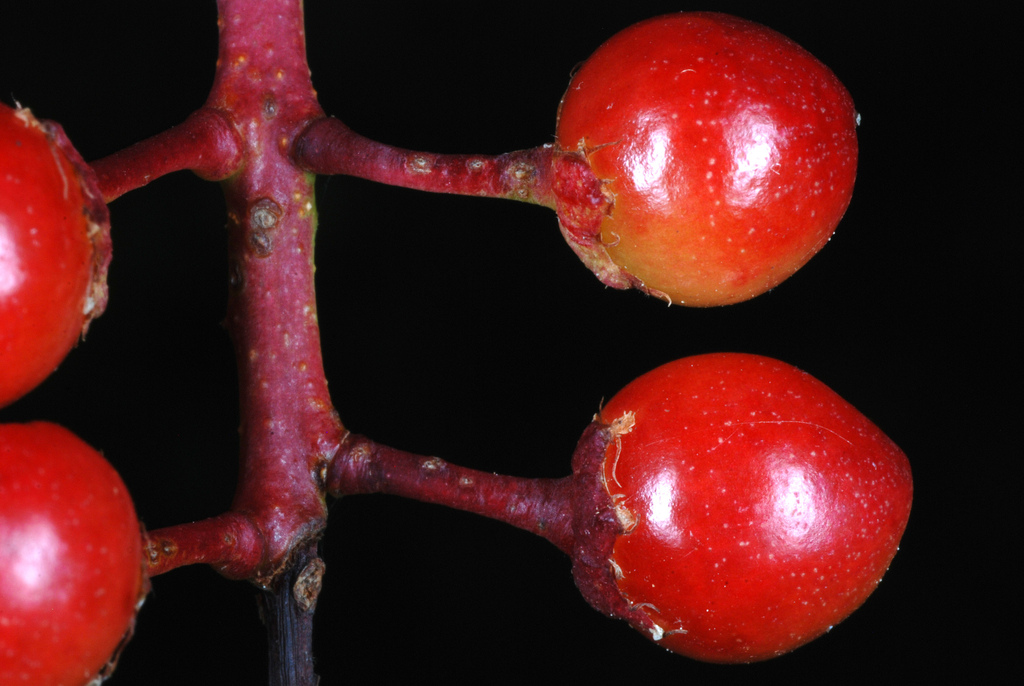
Wild cherry
- Origin
- North America
- Part used
- Seeds/fruits
- Tradition
- Traditional ethnobotany
Wild cherry, the tree of North America's forests, held a place of honor in the pharmacopoeias of Native American peoples, who used its bark as a decoction to ease coughing and respiratory ailments. European settlers quickly adopted this use, so much so that the bark of Prunus serotina became a classic ingredient in nineteenth-century chest syrups. The fruit itself, fleshy and slightly bitter in the wild, was also turned into homemade jams and wines, while the seeds remained reserved for very marginal, cautious uses.
Traditional uses
Easing dry coughs
Wild cherry bark was traditionally used as a decoction or a syrup to calm irritating coughs, a use widely attested in nineteenth-century North American pharmacopoeia.
A traditional bitter tonic
The dried bark was sometimes used as a diluted digestive bitter, thought to lightly stimulate the appetite after a period of convalescence.
A folk fortifying use
In certain North American folk traditions, very mild preparations made from ripe fruit were consumed as a general fortifier, with no link to any proven slimming use.
A soothing external use
Diluted bark decoctions were reportedly used as a wash on mild skin irritation, according to poorly documented local folk uses.
Before you use it
The seeds, bark, and leaves of Prunus serotina contain cyanogenic glycosides that can release cyanide; any preparation made from seeds or pits is strongly discouraged outside professional supervision. Discouraged for pregnant or breastfeeding women, as well as young children, because of the toxic risk. Never eat the seeds raw, crushed, or in large amounts; only the flesh of the ripe fruit, with the pit removed, is traditionally eaten. Seek the advice of a health professional before any internal use, particularly if undergoing medication.
The detailed notebook
- Prepared as a paste or decoction
- Traditional duration of use
- Known contraindications
- Related species and their uses
Where to find it
Partner herbalists — available with the detailed notebook.
Sources
PFAF, PubMed, Wikipedia