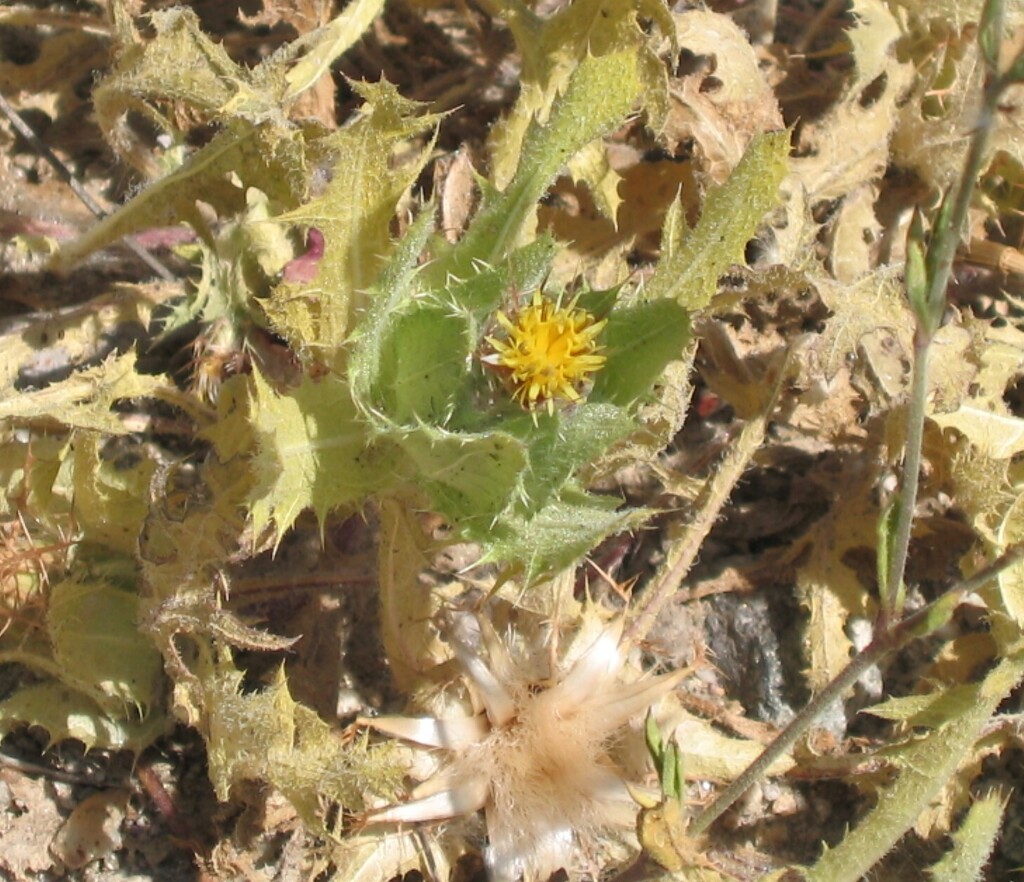
Blessed Thistle
- Origin
- Middle East
- Part used
- See detailed notebook
- Tradition
- Traditional ethnobotany
Blessed thistle, a plant bristling with spines and crowned with yellow flowers, was once cultivated in gardens of simples for its so-called "blessed" virtues, credited with the power to relieve numerous ailments. Native to the eastern shores of the Mediterranean, it reached the monasteries of medieval Europe, where monks and apothecaries made it one of the most celebrated bitter remedies.
Traditional uses
Before you use it
A strongly bitter plant reserved for adults: not advised for pregnant women, owing to a traditional emmenagogue use that has been reported. Avoid in case of allergy to plants of the Asteraceae family (daisies, chrysanthemums, ragweed). Prolonged or high-dose use may irritate the digestive mucosa; seek the advice of a health professional before any use, particularly during breastfeeding. Do not use in children without medical advice.
The detailed notebook
- Prepared as a paste or decoction
- Traditional duration of use
- Known contraindications
- Related species and their uses
Where to find it
Partner herbalists — available with the detailed notebook.
Sources
PFAF