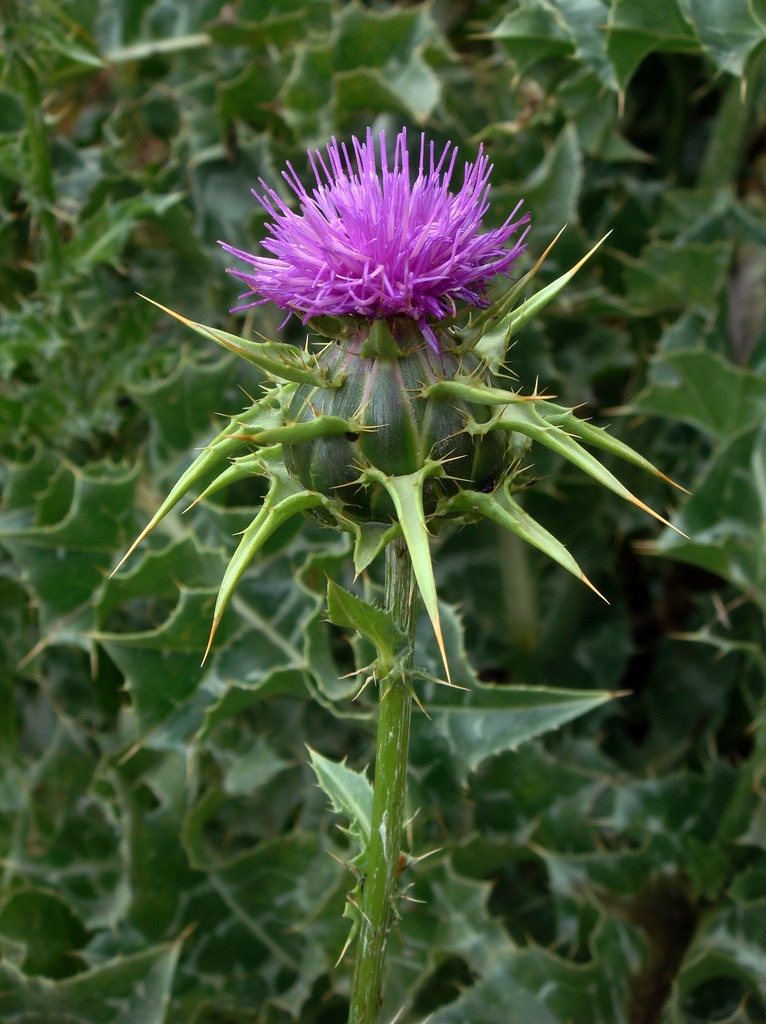
Milk Thistle
- Origin
- Europe
- Part used
- Leaves, Seeds/fruits
- Tradition
- Traditional ethnobotany
Recognizable by its spiny, white-veined leaves, milk thistle has adorned roadsides and old parsons' gardens for centuries. Legend has it that its white marbling comes from drops of the Virgin Mary's milk, hence its name and its old reputation tied to the liver and to breastfeeding. Herbalists of the 19th century already held it in high esteem as a "protective" plant for the body.
Traditional uses
Traditional liver support
Milk thistle seeds are traditionally associated with liver wellbeing and with accompanying dietary excess. This is one of the plant's oldest and best-documented uses.
Digestive comfort after a heavy meal
A traditional use of the seeds is recorded for accompanying digestion after rich meals or extended periods of festive eating.
A spring or autumn cure
In European folk tradition, milk thistle featured in so-called seasonal "cleansing" cures, often combined with other bitter plants.
Traditional skin use
The leaves were sometimes used externally in traditional practice, particularly to accompany minor skin irritation, though this use is less documented than that of the seeds.
Before you use it
Not advised without medical guidance in cases of liver or bile duct disease (particularly biliary obstruction). Possible interactions with certain medications (metabolized by the liver): consult a pharmacist or doctor if under treatment. As a precaution, avoid for pregnant or breastfeeding women and young children without professional guidance. People allergic to plants in the daisy family (marguerite, artichoke, chrysanthemum) should be cautious.
The detailed notebook
- Prepared as a paste or decoction
- Traditional duration of use
- Known contraindications
- Related species and their uses
Where to find it
Partner herbalists — available with the detailed notebook.
Sources
PFAF, Wikipedia