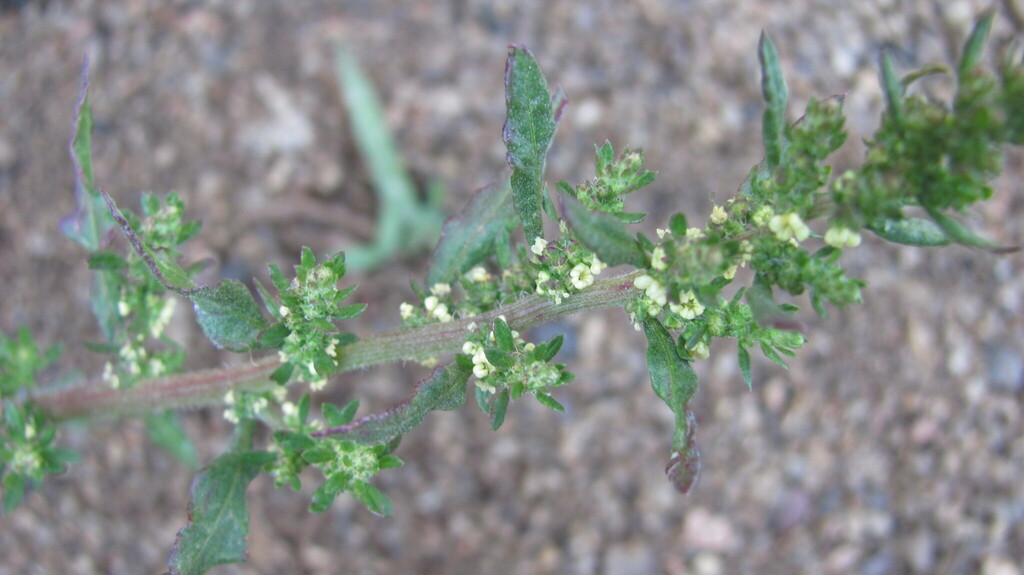
Chenopodium album
- Origin
- Africa
- Part used
- See detailed notebook
- Tradition
- Traditional ethnobotany
Long considered a simple weed of cultivated fields, Chenopodium album has nonetheless accompanied people for millennia, both on the plate and in folk pharmacopeia. In Africa as in Europe and Asia, its young shoots were harvested just like wild spinach, and its leaves were credited with soothing properties for everyday ailments. A humble plant, often called a "weed," but one that rural tradition kept a careful eye on.
Traditional uses
Supporting transit and digestive heaviness
Cooked leaves were traditionally eaten as a vegetable to help with sluggish digestion and to provide a source of fiber and minerals in the rural diet.
Application on irritated skin
Used externally, crushed leaves or a poultice were applied to insect bites, minor irritations, and superficial burns according to folk tradition.
Traditional use against coughing
Some rural traditions report using a leaf decoction to soothe coughing and mild respiratory ailments.
Nourishing famine-relief plant
Chenopodium album has been and remains eaten as a leaf vegetable in times of scarcity in many regions of the world, its seeds also being ground into a supplementary flour.
What to know before use
Rich in oxalates and nitrates, the plant is not recommended in large amounts or repeatedly, particularly for people prone to kidney stones. Consuming the seeds raw or in large amounts is not recommended due to their saponin and irritant content. Use in pregnant or breastfeeding women and young children is not recommended for lack of sufficient safety data. Do not confuse with other wild goosefoots; when in doubt about identification, refrain from harvesting and eating it.
The detailed notebook
- Prepared as a paste or decoction
- Traditional duration of use
- Known contraindications
- Related species and their uses
Where to find it
Partner herbalists — available with the detailed notebook.
Sources
PFAF, Wikipedia