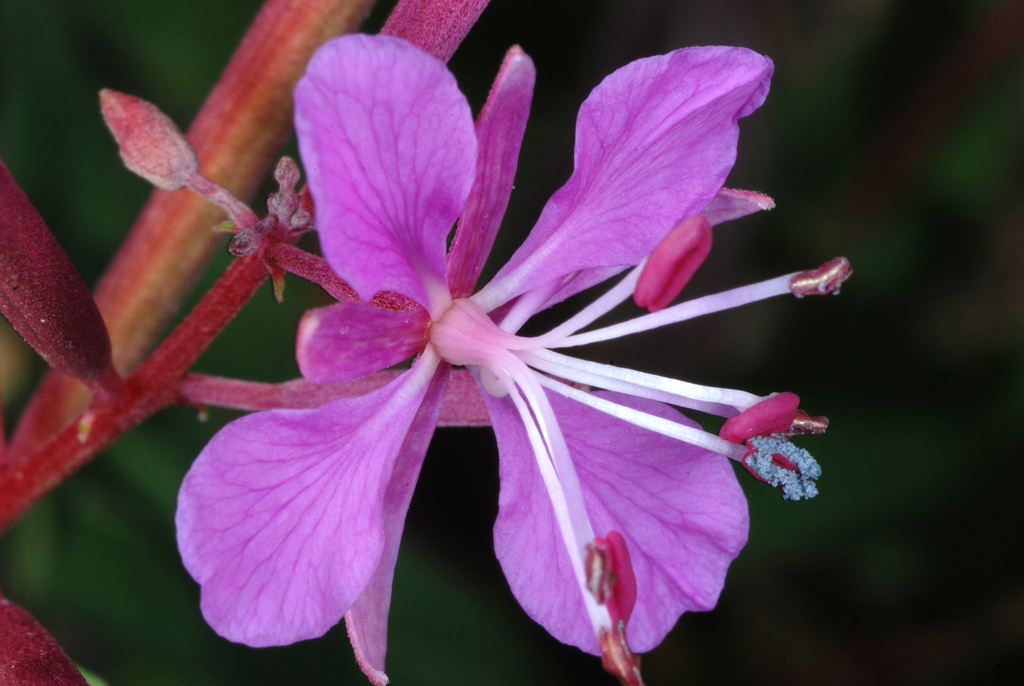
Epilobium angustifolium
- Origin
- North America
- Part used
- Seeds/fruits, Root, Stem
- Tradition
- Traditional ethnobotany
Narrow-leaved fireweed, also known as Epilobium angustifolium or Chamaenerion angustifolium, graces cleared land and burned edges across North America and Europe, where it was long one of the first signs of renewal after fire. Old herbalists sometimes called it "flowering willowherb" for its tall, pinkish stem topped with purple flowers, and gave it a discreet but faithful place in folk uses.
Traditional uses
Soothing the digestive mucous membranes
The young shoots and stem were traditionally infused to help with mild digestive discomfort, in keeping with the gentle teas used after meals.
Traditional care for irritated skin
Preparations made from the root or stem were sometimes applied as a compress to minor skin irritation, a use reported in North American and Russian folk traditions.
Traditional prostate and urinary use
In Eastern Europe, fireweed is traditionally associated with male urinary comfort, particularly in older men, though the documented sources remain mostly empirical.
A soothing evening tea
Taken as an infusion, fireweed was sometimes included in evening teas for its gentle, calming virtues, in the manner of other plants of the same family.
Before you use it
As scientific data remain limited, it is advisable to seek the advice of a health professional before any prolonged use. Avoid use in pregnant or breastfeeding women, for lack of sufficient safety data. Do not exceed occasional traditional uses without the advice of a qualified herbalist.
The detailed notebook
- Prepared as a paste or decoction
- Traditional duration of use
- Known contraindications
- Related species and their uses
Where to find it
Partner herbalists — available with the detailed notebook.
Sources
Wikipedia