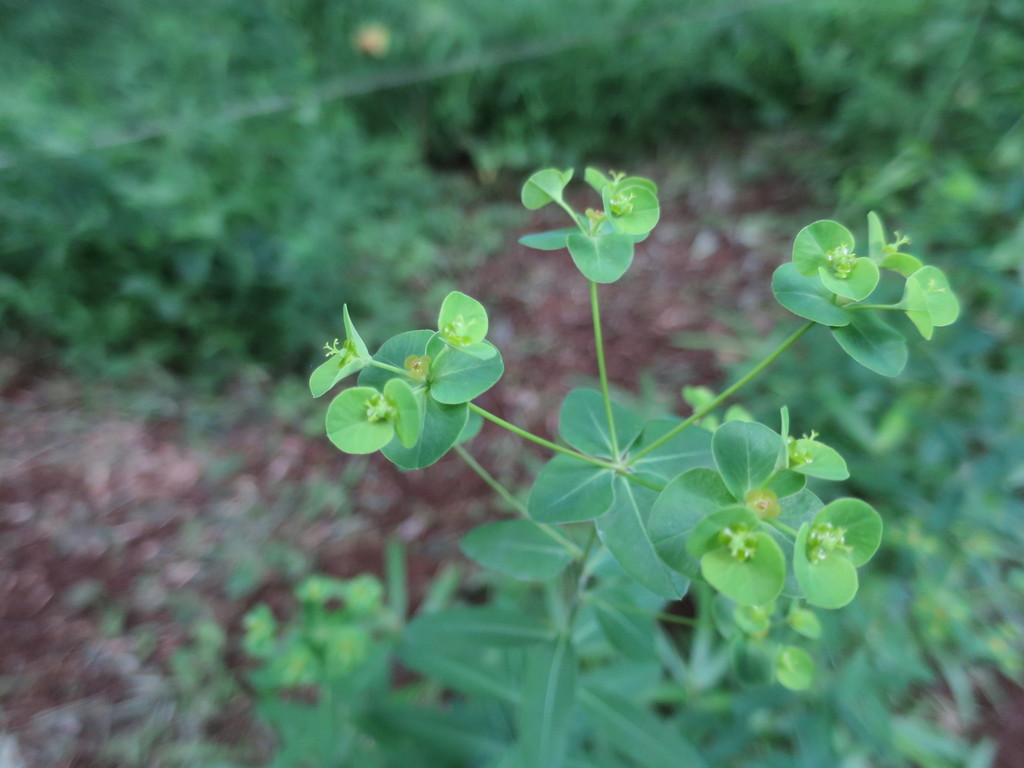
Euphorbia pekinensis
- Origin
- Asia
- Part used
- See detailed notebook
- Tradition
- Traditional ethnobotany
In old treatises of Chinese pharmacopeia, the root of Da Ji — Euphorbia pekinensis — holds a place apart among the plants known as "strong purgatives," reserved for the experienced hands of herbalists. It has been mentioned for centuries in traditional Chinese medical texts, always accompanied by a warning about its potency. It is a plant respected more than freely used.
Traditional uses
Traditional purgation of edema
The root was traditionally used in Chinese medicine to promote fluid elimination and treat states of accumulation, particularly effusions and ascites, always as a cooked preparation and under supervision.
Congestion and cough with fluid retention
Combined with other plants in classic formulas, it was used for coughs accompanied by a sensation of chest tightness linked to fluid retention according to Chinese humoral theory.
Application on boils and swelling
The crushed root or a poultice made from it could be applied locally to benign skin growths, boils, and swelling in Chinese folk tradition.
Elimination of internal toxins
Classified among the so-called "drastic" plants of TCM, it was used in formulas intended to expel what was perceived as deep toxic accumulations in the body.
What to know before use
A plant toxic in its raw state: the root must always be prepared (cooked in vinegar) according to traditional methods before any use, which reduces but does not fully eliminate its toxicity. Never use without the supervision of a qualified practitioner of traditional Chinese medicine or a health professional: risk of severe digestive trouble, violent diarrhea, and dehydration. Contraindicated during pregnancy, breastfeeding, in children, the elderly or weakened, and in cases of digestive weakness or kidney disease. The plant's fresh latex is irritating to skin and mucous membranes; never bring it near the eyes or ingest it without adequate processing.
The detailed notebook
- Prepared as a paste or decoction
- Traditional duration of use
- Known contraindications
- Related species and their uses
Where to find it
Partner herbalists — available with the detailed notebook.
Sources
PFAF