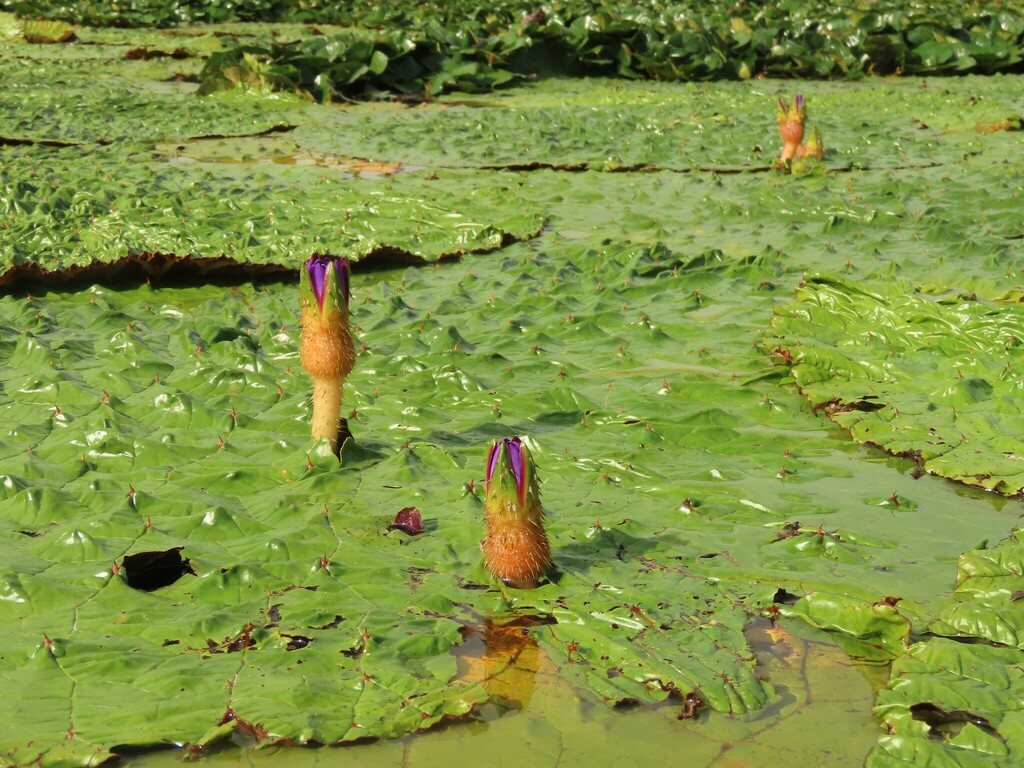
Euryale ferox
- Origin
- Asia
- Part used
- See detailed notebook
- Tradition
- Traditional ethnobotany
In the tranquil ponds of Asia, beneath broad, spiny leaves floating on the water's surface, ripens the seed of Euryale ferox — which traditional Chinese herbalists called "Qian Shi." For centuries, this nourishing seed has featured in the kitchens and traditional pharmacopeia of the Far East, where it was considered a fortifying food-remedy, particularly for the kidneys and spleen according to ancient Chinese medicine.
Traditional uses
Support for the spleen and stomach
Traditionally eaten as a porridge or soup, the Euryale seed was reputed to soothe minor digestive troubles and support a failing appetite, particularly in weakened people.
A traditional kidney tonic
In classical Chinese medicine, Qian Shi was used for what was called "consolidating" the kidney's energy, particularly in cases of frequent urinary leakage or general weakness linked to age.
Traditional support for discharge
It was traditionally used to help with certain whitish vaginal discharge considered, in Chinese humoral theory, a sign of weakness of the kidney's "Qi."
A fortifying food for convalescence
Added to long-simmered broths, the seed was offered to convalescents and the elderly as a restorative food, in the manner of a gentle, nourishing tonic.
What to know before use
Avoid in cases of constipation or transit troubles, as the seed is traditionally considered astringent and may worsen these discomforts. Not recommended in cases of diagnosed urinary retention or urinary troubles, without the advice of a health professional. Seek the advice of a qualified practitioner before any prolonged use, particularly in combination with other plants or treatments. The raw seed is not eaten: it must always be cooked before any food or traditional use.
The detailed notebook
- Prepared as a paste or decoction
- Traditional duration of use
- Known contraindications
- Related species and their uses
Where to find it
Partner herbalists — available with the detailed notebook.
Sources
PFAF