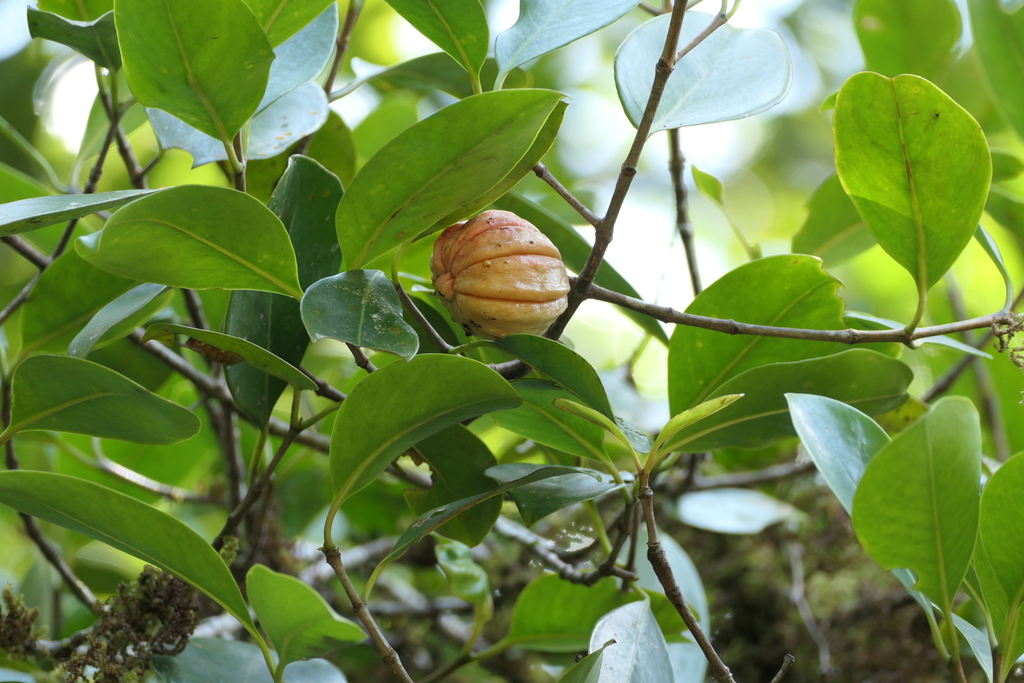
Garcinia gummi-gutta
- Origin
- Asia
- Part used
- See detailed notebook
- Tradition
- Traditional ethnobotany
Native to the damp forests of southern India and Sri Lanka, Garcinia gummi-gutta, also called kokum or Malabar tamarind, has for centuries been a discreet companion of the kitchens and folk remedies of the Malabar coast. Its tangy fruit, dried into dark slices, flavored fish curries as much as preparations intended to relieve everyday ailments. The elders of Kerala always kept a supply, somewhere between spice and remedy.
Traditional uses
Support for heavy digestion
The dried fruit was traditionally added to dishes to aid the digestion of rich meals and combat feelings of heaviness after eating.
Soothing throat irritation
A fruit-based preparation was sometimes used traditionally to soothe irritated throats and help with mild respiratory ailments.
A traditional slimming use
In certain regions of India, the dried fruit was consumed as a tea or included in meals with a traditional aim of moderating the appetite, a use now popularized in the form of standardized extracts.
Application on irritated skin
The pulp or a fruit-based preparation was sometimes applied locally to soothe certain skin irritations, according to folk uses of the Malabar coast.
What to know before use
Not recommended for pregnant or breastfeeding women, for lack of sufficient safety data. Concentrated extracts (particularly those rich in hydroxycitric acid) are associated in the literature with cases of liver trouble; any prolonged course should be supervised by a health professional. Possible interactions with diabetes or cholesterol treatments: seek medical advice before any regular use. Do not exceed traditional culinary doses without the advice of a qualified professional.
The detailed notebook
- Prepared as a paste or decoction
- Traditional duration of use
- Known contraindications
- Related species and their uses
Where to find it
Partner herbalists — available with the detailed notebook.
Sources
PFAF, Wikipedia