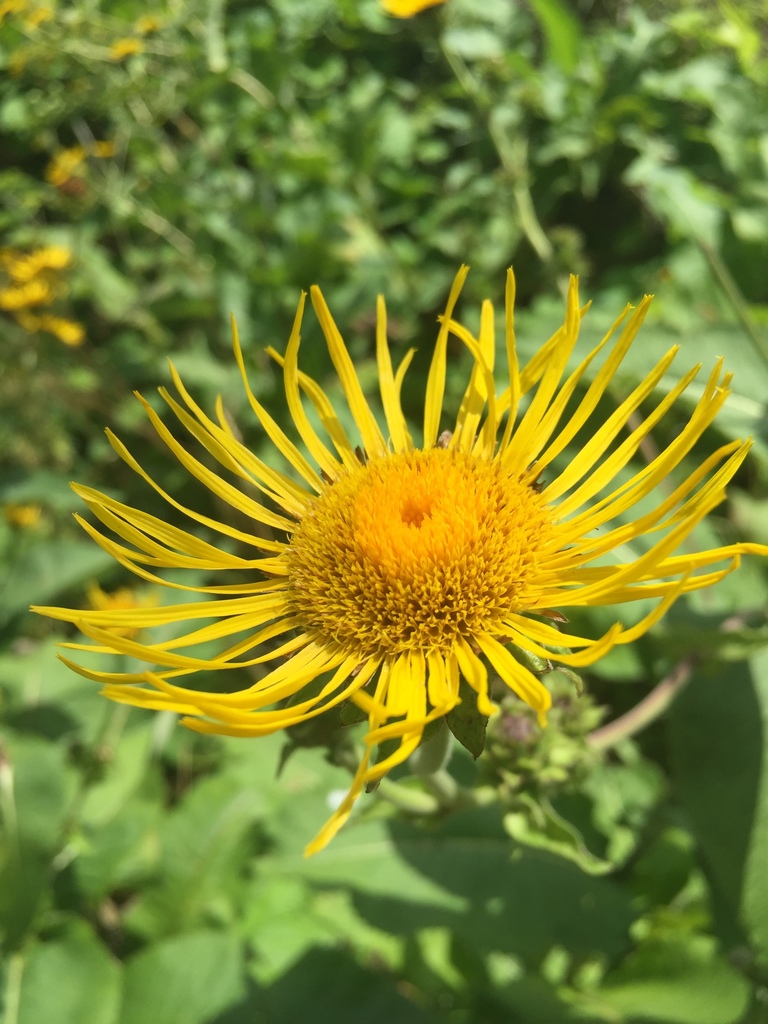
Elecampane
- Origin
- Europe
- Part used
- See detailed notebook
- Tradition
- Traditional ethnobotany
A great figure of herb gardens since antiquity, elecampane owes its species name, helenium, to Helen of Troy, who is said to have held it in her hand while fleeing her homeland. In Europe, it was long called ‘horse's eye’ or ‘vet's herb,’ so often was it used to treat livestock as well as people, particularly for chest complaints.
Traditional uses
Traditional support for the respiratory tract
Elecampane root was traditionally used in Europe to help with stubborn coughs and congested bronchial passages, reputed to promote expectoration.
A bitter digestive tonic
Its pronounced bitterness earned it a place among the plants used to stimulate the appetite and support sluggish digestion.
A traditional remedy for livestock
In the European countryside, the root was commonly used to treat horses and oxen suffering from coughs or digestive troubles, hence some of its popular names.
A soothing external application
As a decoction or compress, the root was sometimes used traditionally, externally, on irritated skin.
Before you use it
Not advised during pregnancy or breastfeeding, for lack of sufficient safety data. To be avoided by people allergic to plants in the daisy family (daisy, arnica, chamomile...). Prolonged or high-dose use is not recommended without the advice of a healthcare professional, as the plant is rich in active compounds (sesquiterpene lactones). Seek advice from a herbalist or doctor before any prolonged use, particularly if undergoing treatment.
The detailed notebook
- Prepared as a paste or decoction
- Traditional duration of use
- Known contraindications
- Related species and their uses
Where to find it
Partner herbalists — available with the detailed notebook.
Sources
PFAF