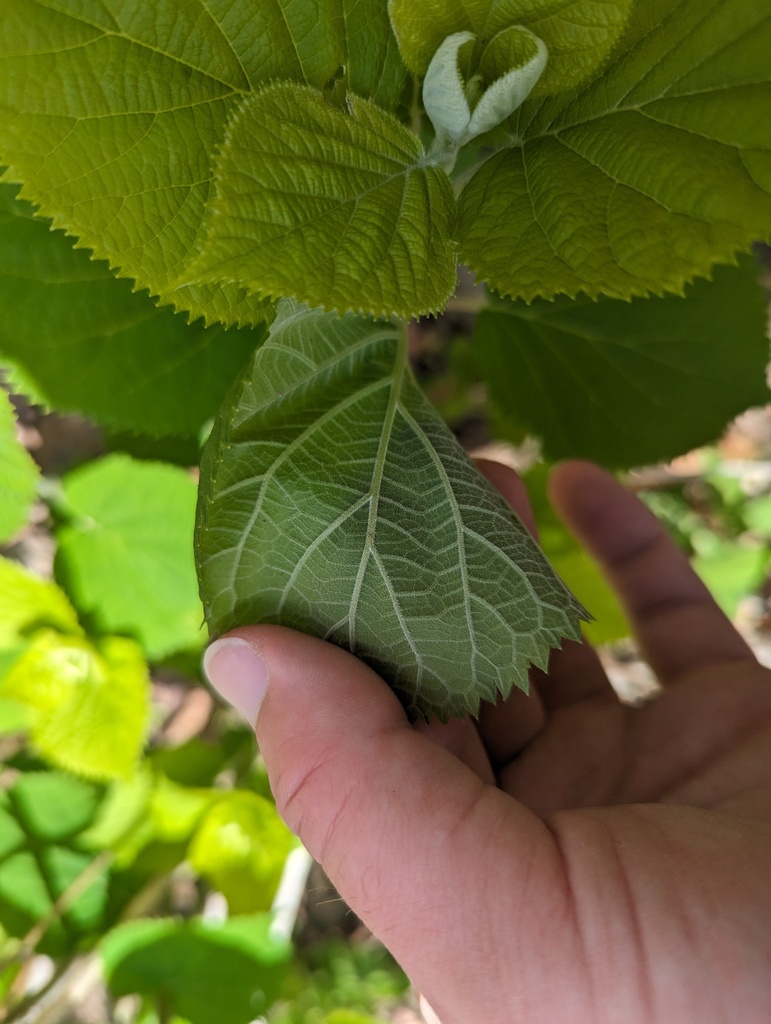
Hydrangea cinerea
- Origin
- North America
- Part used
- Root
- Tradition
- Traditional ethnobotany
Among the great hydrangeas of North American woodlands, Hydrangea cinerea holds a discreet but recognized place in the folk pharmacopoeias of the Appalachians, where its root was long gathered by itinerant herbalists. Cherokee traditions and nineteenth-century eclectic practitioners credited it with particular virtues for supporting the urinary tract. This entry gathers these old uses, passed down through generations more by practice than by scholarly writing.
Traditional uses
Traditional support for the urinary tract
The root was traditionally used in North America to support urinary comfort, particularly for gravel or kidney stones reported in folk uses.
A so-called depurative plant
Considered by eclectic herbalists to be a plant that promotes elimination, it was sometimes combined with other roots in the so-called “depurative” preparations of the nineteenth century.
A traditional use against joint pain
Certain Amerindian traditions report a use of the root decoction to relieve joint and rheumatic discomfort.
Before you use it
This plant contains cyanogenic compounds potentially present particularly in its fresh parts; its use should remain supervised by a qualified professional. Discouraged for pregnant or breastfeeding women, for lack of sufficient safety data. Do not use in children without the advice of a health professional. Avoid prolonged self-medication; a traditional use does not presume long-term safety.
The detailed notebook
- Prepared as a paste or decoction
- Traditional duration of use
- Known contraindications
- Related species and their uses
Where to find it
Partner herbalists — available with the detailed notebook.
Sources
PFAF, Wikipedia