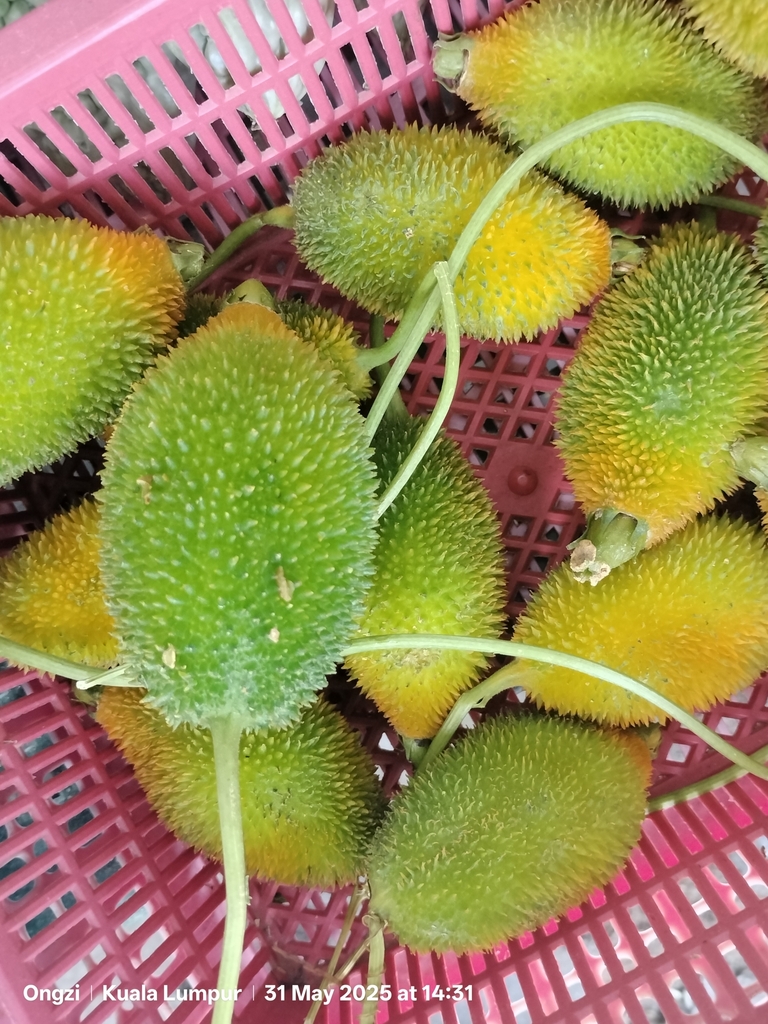
Momordica cochinchinensis
- Origin
- Asia
- Part used
- See detailed notebook
- Tradition
- Traditional ethnobotany
Momordica cochinchinensis, called "Baby Jacques' fruit" or more commonly "gac" in Southeast Asia, is a climbing vine whose scarlet fruit has long been revered in the kitchens and traditional pharmacopeia of Vietnam, Laos, and southern China. It was sometimes nicknamed the "fruit from heaven" for the richness of its orange pulp surrounding the black seeds.
Traditional uses
Traditional skin care
The pulp and oil extracted from the fruit's outer layer were traditionally applied to the skin to soften it and restore its radiance, particularly in Vietnamese cosmetic uses.
A traditional fortifying food
The fruit's red-orange pulp, very rich in carotenoid pigments, was used in preparing gac rice (xôi gấc), a festive dish traditionally eaten for its fortifying virtues and its symbolism of good fortune.
Traditional eyesight support
In traditional Vietnamese medicine, regular consumption of the fruit's pulp was associated with maintaining good eyesight, linked to its high content of pigments related to beta-carotene.
Use of the seeds in Chinese medicine
The fruit's seeds, called mubiezi in traditional Chinese medicine, were used in external preparations for their attributed properties, particularly for skin troubles or local inflammation.
What to know before use
The seeds of Momordica cochinchinensis contain saponins and are considered toxic if taken orally; they must never be consumed raw or without preparation supervised by a knowledgeable person. The use of the seeds, externally or internally, belongs to specialized knowledge of traditional Chinese medicine and should only be considered after the advice of a qualified professional. The fruit's pulp (excluding seeds) is a food and generally well tolerated, but any large-quantity consumption should remain reasonable, particularly in pregnant or breastfeeding women, as a precaution. Avoid any use in young children without medical advice, due to the lack of safety data on the seeds and concentrated extracts.
The detailed notebook
- Prepared as a paste or decoction
- Traditional duration of use
- Known contraindications
- Related species and their uses
Where to find it
Partner herbalists — available with the detailed notebook.
Sources
PFAF