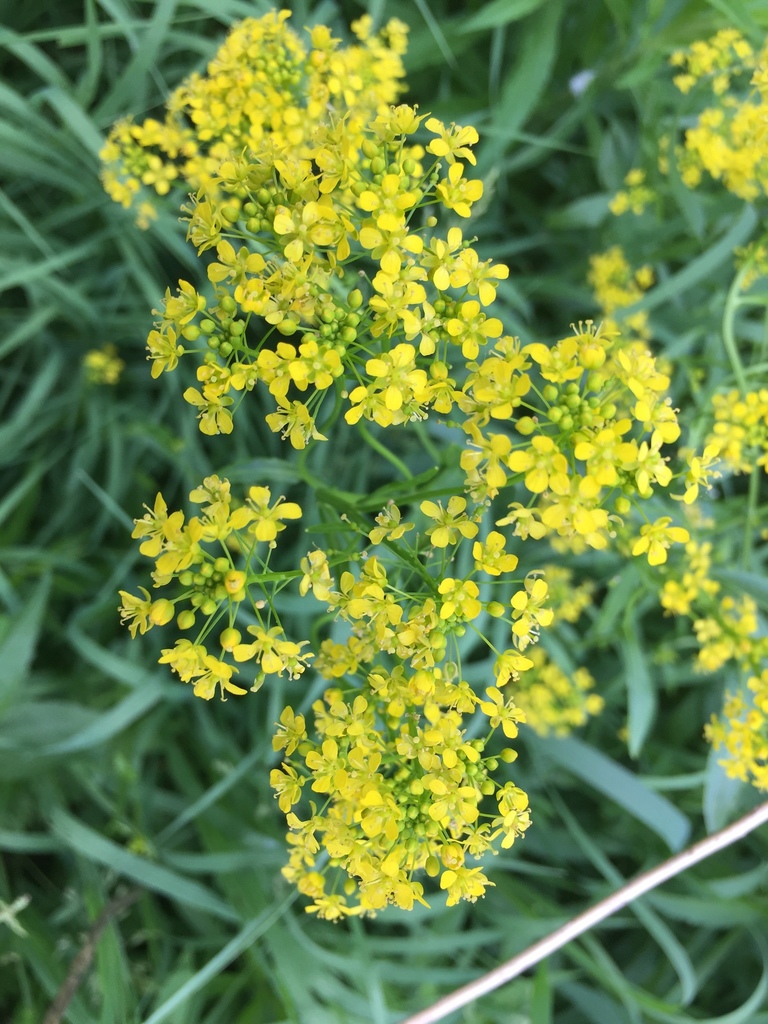
Dyer's woad
- Origin
- Europe
- Part used
- See detailed notebook
- Tradition
- Traditional ethnobotany
Dyer's woad was part of the European countryside for centuries, grown for the precious blue color drawn from its leaves, notably in the Pays de Cocagne around Toulouse. Before the arrival of tropical indigo, it was Europe's main source of textile blue. The old herbalists also credited it, more quietly, with a few uses for the skin and for fevers.
Traditional uses
Application on irritated skin
Crushed leaves or a poultice were traditionally placed on skin inflammation and certain wounds to soothe the skin, according to old folk uses.
A traditional blue dye
Woad's oldest and best-documented use remains for dyeing: the fermented leaves produced the blue pigment used to dye wool and fabric since antiquity.
Traditional use for fevers
In some European folk pharmacopoeias, a root- or leaf-based preparation was used to help with feverish states, a use now poorly documented scientifically.
Occasional cleansing use
Woad sometimes featured among the so-called spring "cleansing" plants, taken in small amounts to accompany traditional seasonal cures.
Before you use it
A plant poorly documented for modern internal use: it is best to reserve its use for traditional external applications and to consult a health professional before any use. Discouraged for pregnant or breastfeeding women, for lack of sufficient safety data. Do not use in children without the advice of a qualified professional. Some species of the genus Isatis contain compounds that may interact with ongoing treatments; seek advice if taking medication.
The detailed notebook
- Prepared as a paste or decoction
- Traditional duration of use
- Known contraindications
- Related species and their uses
Where to find it
Partner herbalists — available with the detailed notebook.
Sources
Wikipedia