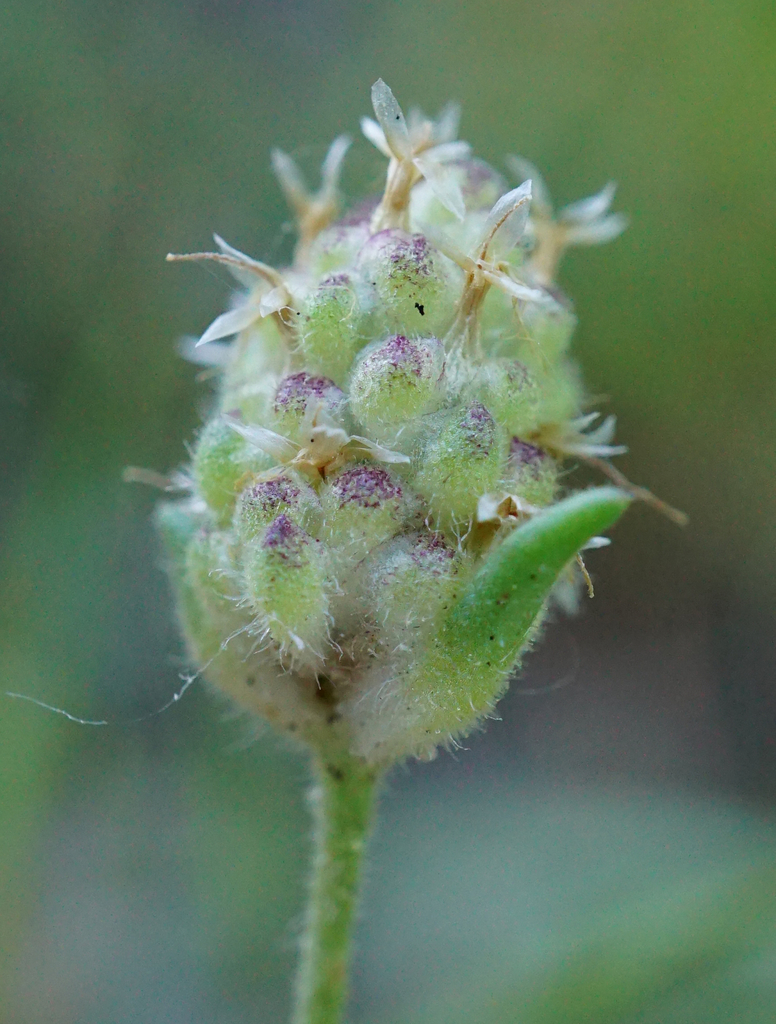
Plantago indica
- Origin
- Europe
- Part used
- See detailed notebook
- Tradition
- Traditional ethnobotany
Plantago indica, often called black psyllium or fleawort, was grown from the 19th century onward in European gardens for its mucilaginous seeds. The old herbalists readily recommended it as a gentle regulator of transit, in the long tradition of emollient plants.
Traditional uses
Gentle regulation of transit
The seeds, swollen with water, traditionally formed a mucilage used to relieve occasional constipation and ease the passage of stool.
Soothing irritated mucous membranes
The mucilage was also used in folk tradition to calm mild inflammation of the digestive tract, particularly in case of intestinal irritation.
A soothing poultice
Used externally, the crushed, moistened seeds sometimes served as an emollient poultice for irritated skin.
Soothing for the airways
Some rural traditions credited black psyllium mucilage with soothing properties for an irritated throat, alongside other plants.
Before you use it
Always follow the dose with a large glass of water: the seeds swell considerably, and insufficient hydration can cause discomfort or even blockage. Discouraged in case of narrowing or obstruction of the digestive tract, as well as unexplained abdominal pain. May reduce the absorption of medications taken at the same time: space doses at least two hours apart and seek the advice of a health professional. Use in pregnant women, young children, or alongside medication must be discussed with a health professional.
The detailed notebook
- Prepared as a paste or decoction
- Traditional duration of use
- Known contraindications
- Related species and their uses
Where to find it
Partner herbalists — available with the detailed notebook.
Sources
PFAF, Wikipedia