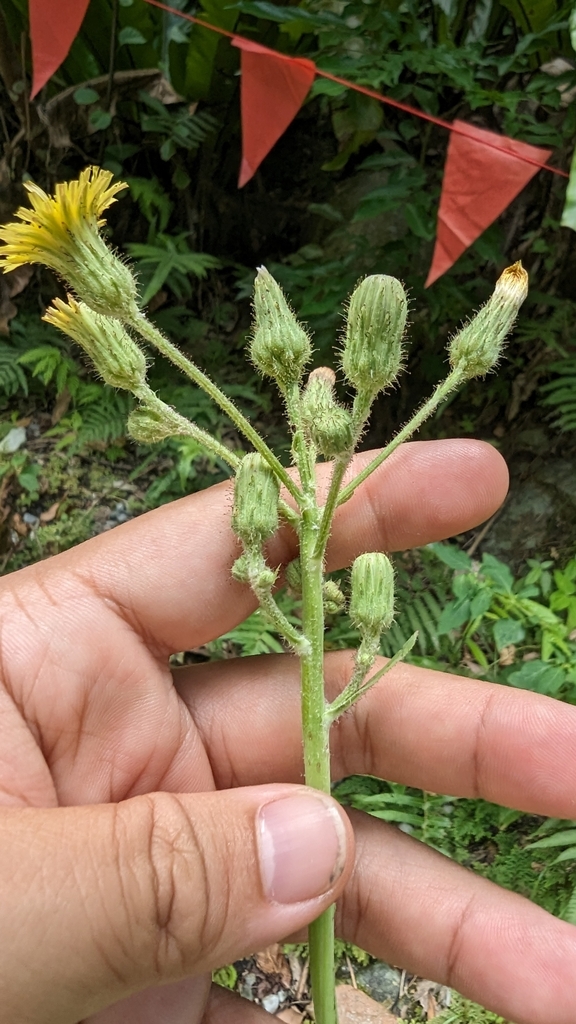
Sonchus arvensis
- Origin
- Europe
- Part used
- See detailed notebook
- Tradition
- Traditional ethnobotany
Field sowthistle, a common plant of embankments and gardens across Europe, was long regarded as a familiar kitchen-garden herb rather than a mere weed. Its milky sap, which beads up as soon as its stem is broken, earned it a quiet place in old folk uses. The old herbalists ranked it among the everyday cleansing and soothing plants.
Traditional uses
Traditional digestive support
The young leaves were traditionally eaten in salads or as an infusion to help with digestion, in the manner of many bitter spring plants.
A spring cleansing plant
Field sowthistle featured among the herbs of the seasonal cleansing cure, meant to support the body through the change of season.
Skin use of the latex
The white latex from the stem was applied locally by the old herbalists to minor skin irritations, according to regional folk uses.
An edible wild leaf
The young shoots, less bitter than wild chicory, were traditionally cooked as a foraged vegetable in the European countryside.
Before you use it
The milky sap can cause mild skin irritation in some people; a patch test on a small area is prudent before any application. As with any wild plant of the daisy family, a cross-allergy is possible in people sensitive to ragweed, daisies, or dandelion. Prolonged or therapeutic internal use should be discussed with a health professional, as traditional data remain sparse. Avoid harvesting along roadsides or in treated areas, as the plant tends to absorb pollutants from the soil.
The detailed notebook
- Prepared as a paste or decoction
- Traditional duration of use
- Known contraindications
- Related species and their uses
Where to find it
Partner herbalists — available with the detailed notebook.
Sources
PFAF, Wikipedia