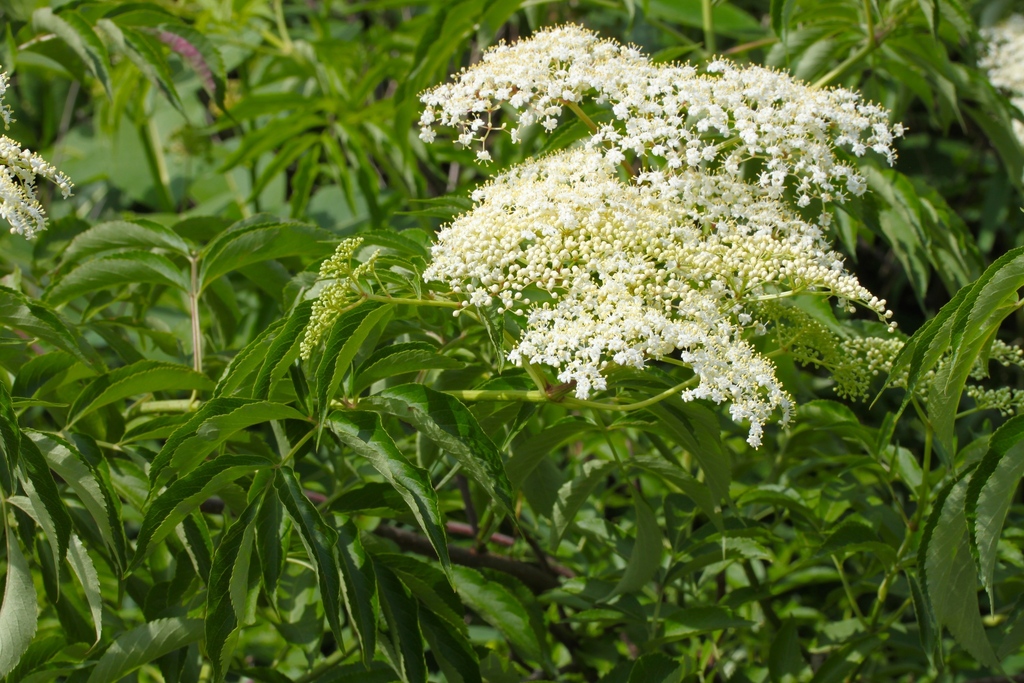
Elder
- Origin
- Europe
- Part used
- Flowers, Seeds/fruits
- Tradition
- Traditional ethnobotany
In the hedgerows and gardens of Europe, elder has long been called the "poor man's medicine chest" by herbalists of the past. Its clusters of white spring flowers and dark autumn berries have shaped family foraging for generations. So many virtues were attributed to it that people once said one should tip one's hat before it, as before an elder.
Traditional uses
Support during colds
Elderflower was traditionally infused hot in winter, to accompany colds and encourage a light, comforting sweat.
A soothing evening infusion
Taken hot before bed, elderflower tea was said to relax and encourage peaceful sleep in European folk tradition.
Berry syrup for winter
Syrup made from cooked elderberries was prepared every autumn in the countryside to accompany the cold months, passed down through generations as a seasonal remedy.
A refreshing floral water
Distilled elderflower water was traditionally used to refresh and soften facial skin, particularly in old cosmetic use.
Before you use it
Raw berries, seeds, bark, leaves, and roots contain potentially toxic compounds: traditionally, only dried flowers and fully cooked, ripe berries are consumed. Thoroughly cooking the berries is essential before any consumption; green or uncooked berries can cause nausea and digestive upset. Not advised without medical guidance for pregnant or breastfeeding women, or for young children. Consult a healthcare professional if taking medication, particularly diuretics or immune-modulating drugs, due to possible interactions.
The detailed notebook
- Prepared as a paste or decoction
- Traditional duration of use
- Known contraindications
- Related species and their uses
Where to find it
Partner herbalists — available with the detailed notebook.
Sources
Wikipedia