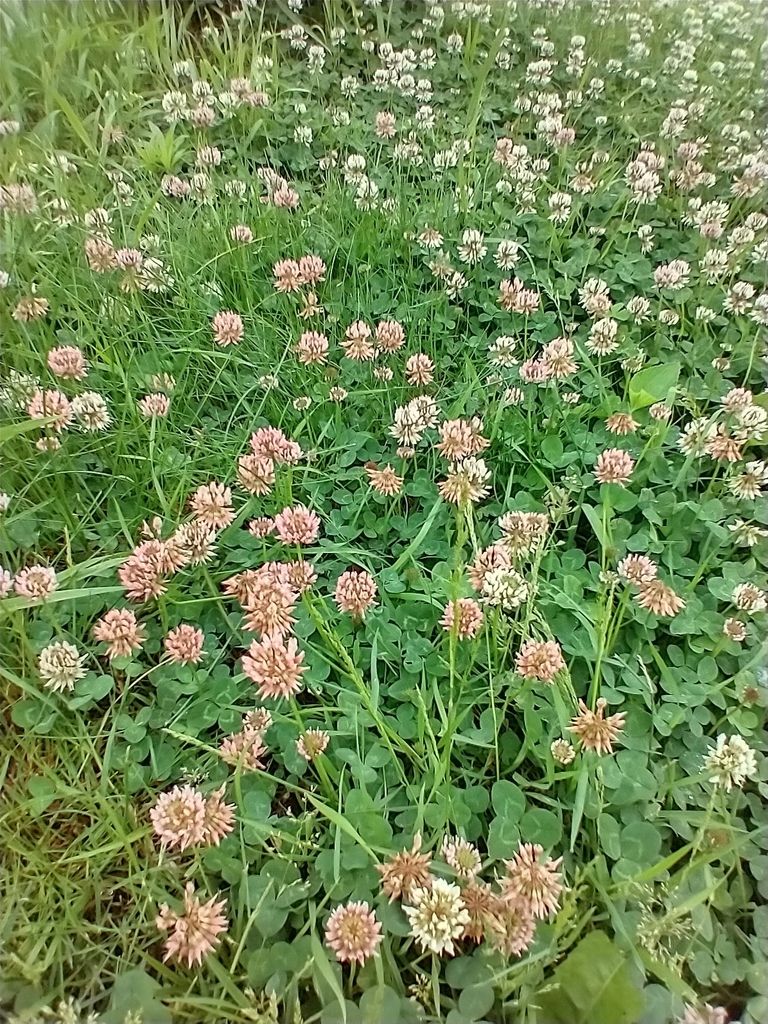
White clover
- Origin
- Europe
- Part used
- See detailed notebook
- Tradition
- Traditional ethnobotany
An unassuming resident of meadows and lawns, white clover once accompanied livestock and people alike, gathered along the paths. The old herbalists ranked it among the simple plants, humble but useful, good to pick without ceremony.
Traditional uses
Traditional digestive support
An infusion of white clover flowers and leaves was once prepared to help with difficult digestion after meals.
Soothing for the airways
Folk tradition credited white clover with soothing properties for a slightly irritated throat and airways.
Soothing external use
As a poultice or compress, the crushed leaves were sometimes applied to minor skin irritation to soothe the skin.
A so-called cleansing plant
Like many meadow plants, white clover was taken as a spring tea, in the traditional logic of "cleansing" the body.
Before you use it
Avoid prolonged or large-quantity consumption in pregnant or breastfeeding women, as a precaution related to the phytoestrogenic compounds found in clovers. Seek the advice of a health professional in case of ongoing hormonal or anticoagulant treatment. Do not confuse it with other clovers or meadow plants when harvesting. Traditional use is not meant to replace medical advice in case of a persistent problem.
The detailed notebook
- Prepared as a paste or decoction
- Traditional duration of use
- Known contraindications
- Related species and their uses
Where to find it
Partner herbalists — available with the detailed notebook.
Sources
PFAF, Wikipedia